
As India prepares to host the 18th BRICS summit, the real question is not whether the grouping can create a new world order, but whether all the member countries can work together in the interest of the Global South. Senior Journalist Shobhan Saxena analyses the role of the grouping in advancing a new world order.
The year 2026 began with a bang. In the early hours of January 3, the sitting president of Venezuela, Nicolas Maduro, was snatched from his bedroom, along with his wife, by the US special forces. Even as US President Donald Trump lauded his military for their “success”, the whole world watched the American military action and Maduro’s appearance in a New York court with stunned silence. Barely had the world regained its breath after the daring American action in the petroleum-rich South American country when US missiles started falling on Iran – another country endowed with oil and gas. Within a matter of hours, Iran’s top political and military leadership was reduced to dust.
Though the protests against the American military actions in Venezuela and Iran were on expected lines, the international community did not see them as isolated events. Viewed together with the continuing war in Ukraine, tariff wars, sanctions, technological restrictions and the weaponisation of finance, the situation has never been as complex as it is today. The international system is in a state of flux. The so-called rules-based order lies in tatters, and there is not much clarity about the new rules being written. But a large majority of countries in the Global South are questioning the world order created by the West. They are demanding a greater say in deciding what comes next.
It is against this backdrop that India is preparing to host the 18th BRICS summit in New Delhi – probably the most important meeting of the group in recent years. Wars, sanctions, trade tensions, energy insecurity and rivalry among major powers have exposed the limitations of a global order which is certainly in decline. BRICS, with its expanded membership and growing economic weight, is increasingly becoming one of the platforms through which a transition to a new order is being negotiated.
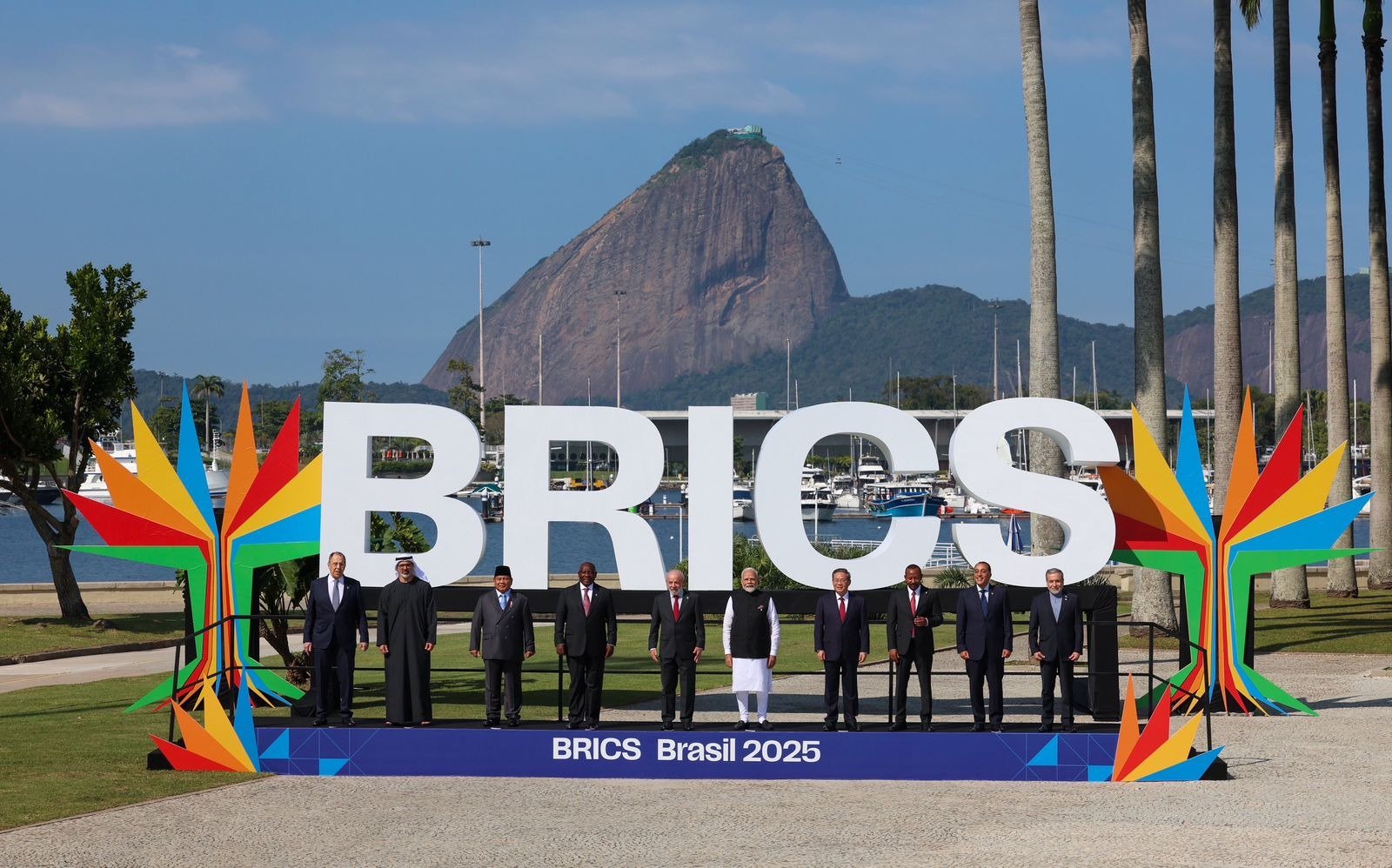
The September 12-13 summit will, therefore, test whether BRICS can convert its growing political and economic weight into a more coherent voice for a multipolar world. The grouping now brings together 11 countries – Brazil, Russia, India, China, South Africa, Egypt, Ethiopia, Indonesia, Iran, Saudi Arabia and the United Arab Emirates. Its expansion has transformed what was once essentially a grouping of five major emerging economies into a much broader representation of the developing world.
Shaping the new order
For much of the post-Cold War period, the international system was dominated by the US and its allies. The United States is still the world’s biggest military power; the dollar remains the dominant global currency and American technology companies dominate the economic system. But the US power no longer automatically translates into Washington Consensus.
That is where BRICS comes into play. Much of the commentary on BRICS, especially in the Western media, fails to see the objective and agenda of the grouping. It is often presented as China, India, Russia, Brazil, South Africa and their new partners sitting around a table and trying to construct an alternative to the West.
The reality is more profound and nuanced.
BRICS is not trying to create a new world order. The group itself is a product of a changed world. BRIC emerged in the aftermath of the 2008 financial crisis, as the economies of Brazil, Russia, India and China not only proved their resilience in the face of the biggest financial crisis of the new century, but also helped save the global economy from total collapse. Yet, they continued to have little say in how the international order was run. In the past 17 years, BRICS has become a geopolitical force, with conviction among its members that its economic weight must translate into political representation.
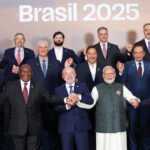
The grouping now has 11 members, representing roughly half of the world’s population, around 40 per cent of global GDP and about a quarter of global trade. Numbers alone do not create geopolitical power. But numbers of this magnitude are hard to ignore. The 2025 Rio Declaration recognised precisely this changing reality. It argued that multipolarity could expand opportunities for emerging and developing economies and described the Global South as a “driver for positive change”. The declaration also called for a more “just, sustainable, inclusive, representative and stable international order”.
The central question confronting the international system is, therefore, no longer simply who dominates it, but who gets to shape its rules.
India’s strategic space
That question is particularly important for India. New Delhi does not want a new Cold War. It has no interest in turning BRICS into an anti-American or anti-West alliance. Nor does it want to see a Chinese-dominated alternative replacing an American-dominated system. India’s interests lie somewhere else: in a world where power is sufficiently dispersed so that no single country can dictate the choices of others. A truly multipolar world.
India is deepening its relationship with the United States while remaining a major defence partner of Russia. It is a member of the Quad while sitting alongside China in BRICS and the Shanghai Cooperation Organisation (SCO). It is strengthening relations with Europe while expanding its engagement with Africa, the Gulf, Latin America and Southeast Asia.
This is the foreign policy of a country that understands that the emerging international system will not be divided into two neat camps. India’s greatest gain from BRICS is, therefore, not a new alliance. It is strategic space. BRICS gives India a platform from which it can press for reform of the IMF, World Bank and the UN system; argue for greater representation of developing countries; expand economic cooperation with emerging markets; and strengthen the voice of the Global South.
The 2025 BRICS declaration specifically called for the Bretton Woods institutions to become more representative and for the increasing economic weight of emerging and developing countries to be reflected in their governance structures. This is an argument India has made for years. BRICS gives it greater weight.
The bigger story
The world is slowly moving from unipolarity towards multipolarity. But multipolarity is not simply about having more powerful countries. It is about changing who gets to make decisions. For decades, most countries in Asia, Africa and Latin America followed the rules of global order without any meaningful participation. As they gain economic and political weight, these countries are now demanding more say in how the global institutions are run. That is why groups like BRICS and the SCO have become more relevant.
This economic dimension is crucial because BRICS’ geopolitical relevance ultimately depends on its ability to deliver economic benefits. Political statements about multipolarity will have limited impact unless the grouping can create stronger trade links, resilient supply chains, investment flows and technological partnerships among its members. India’s attempt to bring its experience with Aadhaar, UPI and digital public infrastructure into the BRICS conversation is significant in this context. The emerging world order will not be shaped only by military alliances or diplomatic declarations. It will also be determined by who controls technologies, digital infrastructure, energy systems, supply chains and financial networks.
But the same diversity that gives BRICS its strength could become its weakness. Its members agree that the existing international system needs reform. Beyond that, the consensus becomes much thinner. This is particularly evident in the debate over de-dollarisation. Reducing excessive dependence on one currency may be attractive to many BRICS members. But replacing the dollar with another dominant currency would hardly constitute a new international order. What developing countries need is greater choice: more resilient payment systems, development finance, trade mechanisms and monetary arrangements.
BRICS has already taken some steps in that direction. The New Development Bank is one example. Its importance lies not merely in the loans it provides but in the fact that it represents an institution created by emerging economies for themselves.
From declarations to delivery
This is where the future of BRICS will be decided. There is no shortage of declarations. The 2025 Rio summit produced 126 commitments covering global governance, finance, health, artificial intelligence, climate change and other areas. The question is whether those commitments can be converted into power.
BRICS cannot afford to become another summit organisation that produces increasingly impressive communiqués while changing little on the ground. Its future credibility will depend on whether it can make cooperation useful: easier cross-border payments, greater development finance, technology partnerships, food and energy security, cooperation on artificial intelligence and a stronger collective voice in institutions such as the IMF and the UN.
For India, hosting the summit is more than a diplomatic milestone. It is an opportunity to shape the agenda of a grouping whose members represent a substantial share of the world’s population, economic activity and energy resources. Countries that once had little choice but to accept the architecture of the international system are acquiring enough economic and political weight to demand a place in redesigning it.
That is the real promise of BRICS.