
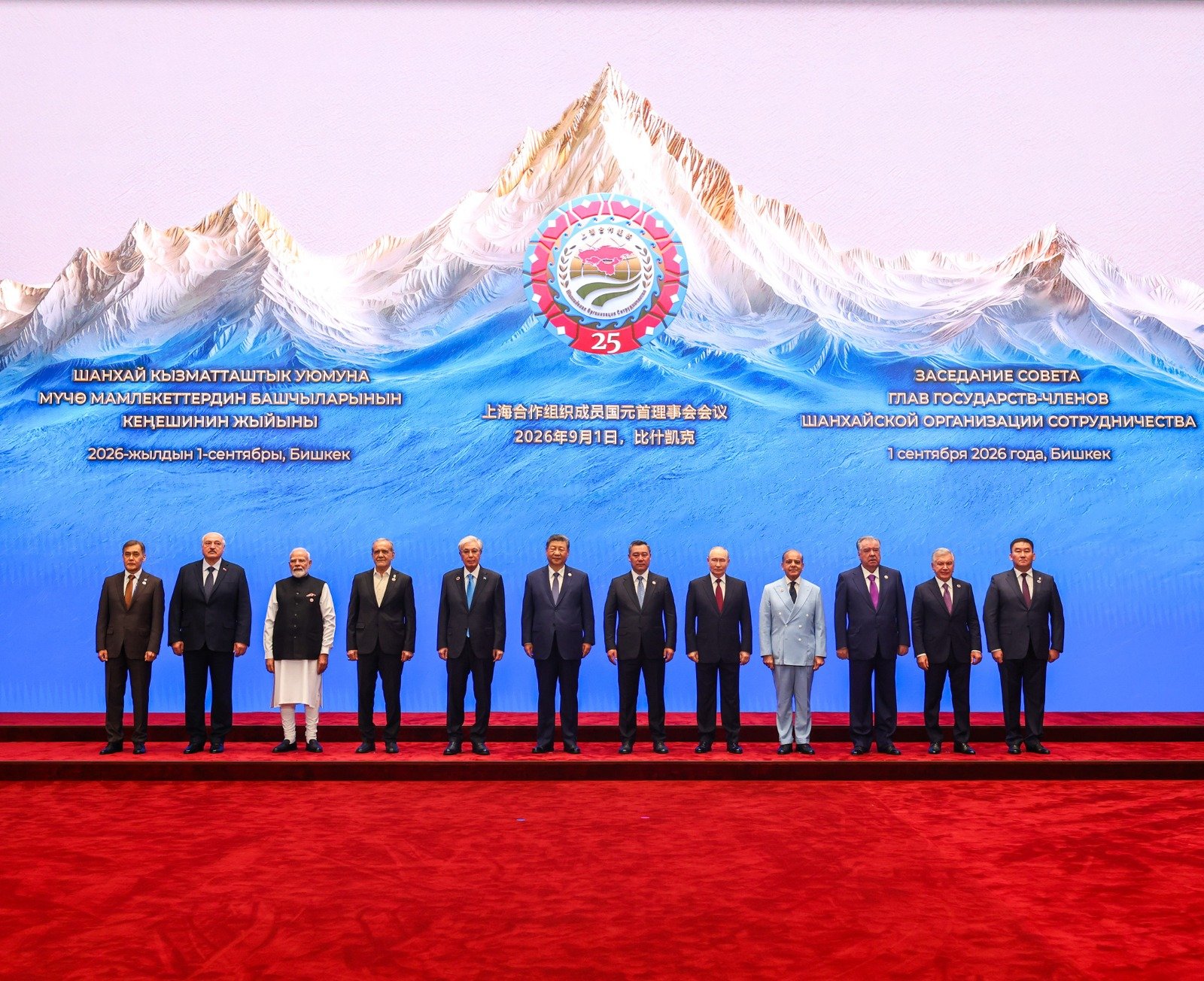
The outcome of the 26th Summit of the Shanghai Cooperation Organisation (SCO) held in Bishkek from August 31 to September 1, 2026, was keenly awaited in diplomatic and government circles across the globe. It came at a time when the world faced debilitating consequences of two major conflicts: one in West Asia and the other in Ukraine. The global community, particularly the Global South, suffered disproportionate hardships due to economic and supply chain disruptions triggered by the unilateral actions of powerful nations.
In this backdrop, the objective of the grouping has been to diplomatically nudge nations toward a democratic, fair, and rational international political and economic framework. The resulting Bishkek Declaration, signed by all 10 member states of the SCO, provides not only a balanced evaluation of the current global situation but also suggests solutions.
It outlines the required cooperative actions to tackle current challenges rather than resorting to threats and sanctions. The theme of the Summit was “25 Years of the SCO: Together for Sustainable Peace, Development and Prosperity”. Key participants at the summit included Indian Prime Minister Narendra Modi, Chinese President Xi Jinping, Russian President Vladimir Putin, Iranian President Masoud Pezeshkian, and Pakistani Prime Minister Shehbaz Sharif.
Indian Challenge: Balancing Major Powers and Core Values
It was a delicate balancing act for Prime Minister Narendra Modi to navigate a line adopted by an organisation heavily influenced by Russia and China. However, the fundamental international values and facts he emphasized proved convincing enough to be added to the final communique- most notably, India’s stance against the double standards on terrorism adopted by certain nations.
While explicitly declaring its non-political and non-military character, the Bishkek Declaration refrained from naming specific countries that indulge in unilateral actions, economic sanctions, military interventions, or state-sponsored terrorism. Nevertheless, global observers can clearly infer that these references point to the United States and Pakistan, respectively.
India maintains friendly relations with both Israel and the US, yet it signed a declaration that unequivocally condemned their military actions in Iran and Palestine. This marks a sharp contrast to previous instances where India chose to remain silent while a majority of countries openly criticised Washington and Tel Aviv.
In his meeting with Putin on the sidelines of the Summit, Modi called for an immediate end to the war in Ukraine for the sake of humanity. Independent observers will note that India adopted a universally acceptable, anti-war stance that prioritises resolving geopolitical issues through dialogue no matter if the war is waged by Russia, the US or Israel.
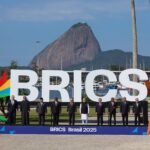
While a meeting between Modi and Xi Jinping on the sidelines was highly anticipated, it did not materialise at this summit. However, a bilateral engagement is expected to take place in New Delhi during the upcoming BRICS Summit on September 12-13.
India’s Strategic Achievements
India also secured several specific diplomatic achievements during the summit. First, it successfully convinced the grouping that the visions crafted over the past 25 years must now transition into tangible achievements.
Further, India’s firm stance against terrorism was highly appreciated. The SCO explicitly called on the international community to combat terrorism, halt cross-border movement of terrorists, and eliminate double standards on the issue.
The current international situation, aggravated by ongoing conflicts, has created severe food and energy security challenges, global trade instability, and climate vulnerabilities. Supply chain disruptions in the Black Sea and the closure of the Strait of Hormuz have heavily impacted the economies of developing and developed nations alike. The state of affairs demands finding effective ways to end economic uncertainties fueled by threats, blockades and unilateral sanctions, thereby ensuring continuous development. The Indian approach focussed on voicing the sentiments of the Global South, which bore the heaviest brunt of maritime trade and supply chain disruptions. Consequently, the Declaration advocates for a fair, open, transparent, and non-discriminatory multilateral trading system and free navigation in international waters.
To achieve greater regional economic integration, Iran demanded that the SCO establish its own independent bank and an export credit agency. This will be viewed by the US as counter to its core interests, denting its financial super power status and may lead to a fresh wave of warnings to countries trying to align with this idea.
Inclusion of English Language and Future Outlook
In a significant diplomatic victory for New Delhi, India’s long-standing demand to amend the SCO charter to include English as an official working language was finally accepted. Until now, only Russian and Chinese were the official working languages. Interestingly, at the time of writing this article, the official English text of the Bishkek Declaration had not yet been formally released.
The SCO also reaffirmed the phrase “One Earth, One Family, One Future” as a guiding philosophy for development- an idea originally championed by India during the 2023 G-20 Summit in New Delhi.
Another Indian initiative was integrated into the text with the Declaration stating a commitment to ‘strengthening scientific, technical and innovative cooperation through active involvement of young people, and through the regular holding of the SCO Young Scientists Forum.’
Most importantly, the declaration included the following clause:
‘Member States reaffirm their unwavering commitment to the universal norms and principles of international law enshrined in the UN Charter and emphasize the need to strengthen its role as a guarantor of international peace and security, sustainable development, and the construction of a representative, democratic, and equitable multipolar world order.’
This particular clause carries profound regional weight, especially given China’s assertive postures in the South China Sea and its ongoing border standoff with India.
Next Presidency to Pakistan
The Bishkek Declaration confirmed that the SCO presidency will transition to the Islamic Republic of Pakistan, which will host the next meeting of the Council of Heads of State in 2027. Global analysts will watch closely how India navigates its core security concerns regarding cross-border terrorism during Pakistan’s tenure.
While the Western bloc continues to view the SCO with scepticism and apprehension, the Bishkek Declaration proactively addressed these concerns, stating: ‘The SCO is not a military-political bloc and is not directed against other states or international organizations. The SCO operates on the basis of openness, non-interference, equality and mutual respect.’
Ultimately, much of what is debated within the grouping serves as a blueprint of ideas and cooperation norms to tackle emerging challenges without resorting to retaliatory measures.
As history often demonstrates, noble ideals may remain mere promises when might is responded to with might. However, given its steady expansion over the last quarter of a century, the SCO possesses immense potential to sustain peace, bolster security and drive economic and technological progress across Eurasia and its partner nations.
It must be conceded that what began as a vehicle to secure Russian and Chinese influence over the region- officially founded on June 15, 2001, in Shanghai with its Secretariat in Beijing- has evolved into a major platform for multipolar diplomacy.