

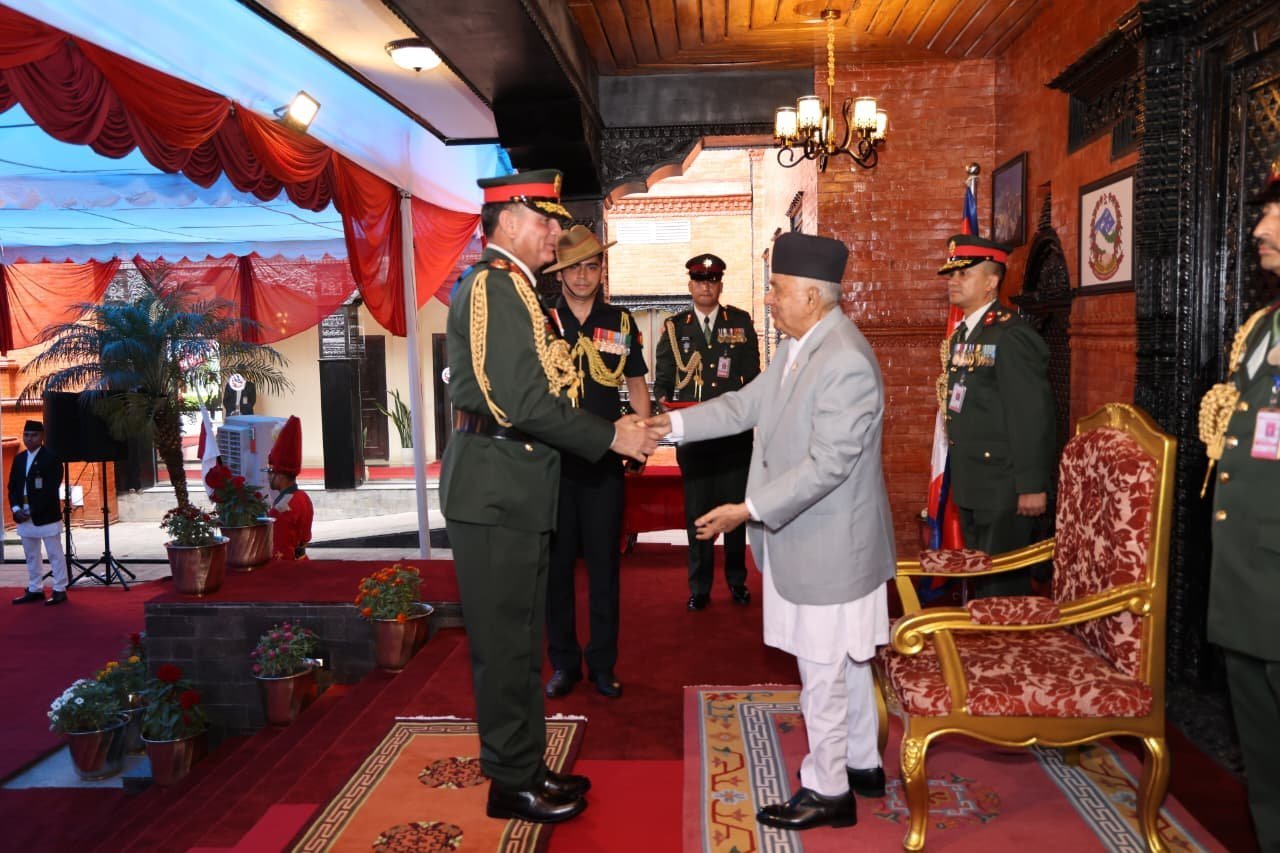
India’s Chief of Army Staff General Dhiraj Seth visited Nepal from 16 to 19 August 2026, where he was conferred the rank of honorary General of the Nepal Army by President Ramchandra Paudel at a special investiture ceremony held at Sheetal Niwas, the President’s house. The honour reflects a longstanding tradition between the armies of India and Nepal, where the Chiefs of both armies are honorary Generals of each other’s army. The tradition began in 1950, when the Indian Army Chief, General K.M. Cariappa, was conferred the title of the honorary General of the Royal Nepal Army. India, in turn, conferred the honorary General title to the Nepali Army Chief General Kiran Shumsher Jung Bahadur Rana. Nepal’s current Army Chief General Ashok Raj Sigdel is the honorary general of the Indian Army.
The practice began in the backdrop of political changes in the region in the 1950s; newly independent India was managing domestic stability and foreign policy, Nepal was transitioning to democracy after ending the Rana rule, and Communist Chinese forces were entering Tibet.
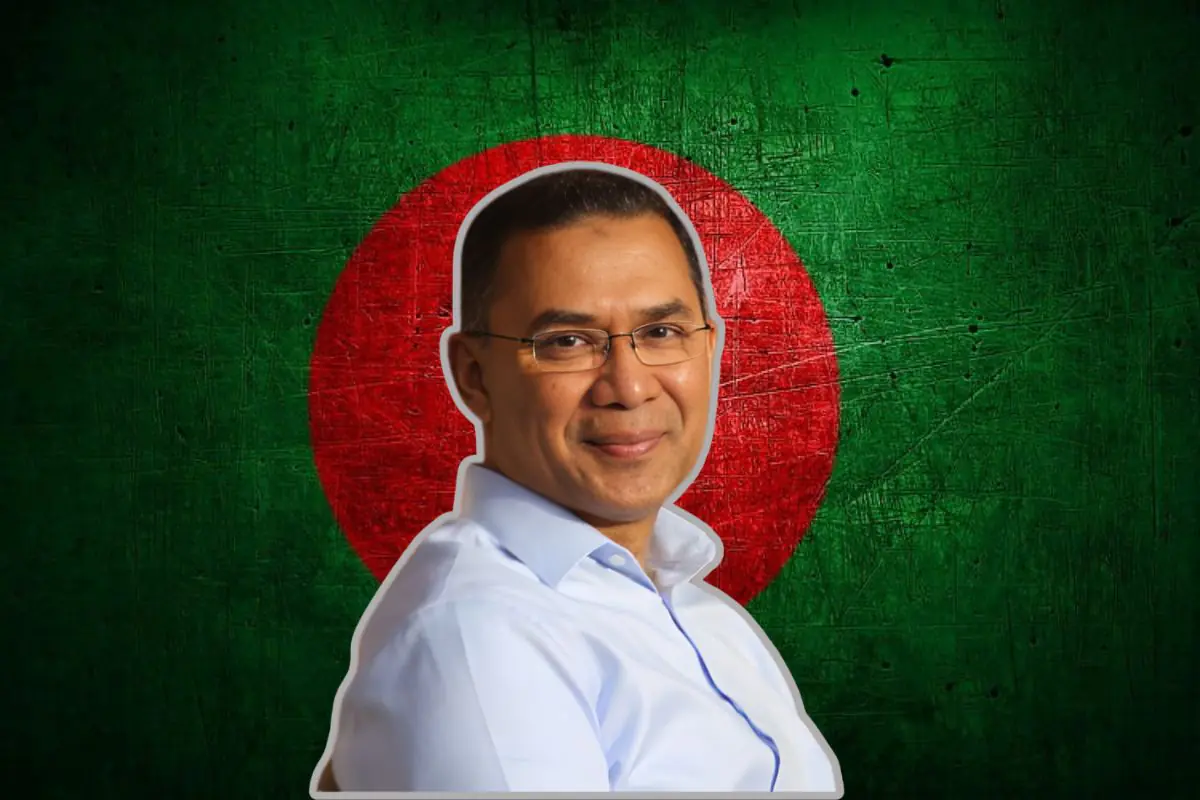
General Seth met the Prime Minister of Nepal, Balendra Shah, who also holds the Defence portfolio. Shah is known to be particular about protocol and has not been meeting foreign dignitaries whose rank did not warrant a meeting with the Prime Minister, but changed his stance recently and had separate meetings with the Ambassadors of India and China. General Seth was able to meet Shah in the latter’s capacity as Defence Minister. Their discussion focused on defence cooperation between the two countries.
Amongst his various other engagements were meeting General Sigdel, laying wreath at the Army Pavilion in Tundikhel ground, which generally hosts Nepal Army parade, interaction with the students and faculty of Staff College at Shivpuri, and a meeting with Indian Army veterans in Pokhara.
Indian military linkages with Nepal are deep and longstanding. In early 1950s, Nepal had requested India’s assistance to modernise its Army. India sent Military Missions to train and modernize the Nepal Army. Every year nearly 250 Nepali army personnel undergo training at Indian military establishments such as the National Defence Academy (NDA), the Indian Military Academy (IMA) or the National Defence College (NDC). Indian Officers also attend the Staff college in Nepal. Many of those who underwent training in the Indian military establishments rose to the ranks of Army Chiefs in Nepal. Former Army Chief General Dharam Bir Singh Thapa has the distinction of being the only non-Indian to take the salute at the passing out parade in IMA. The importance of academic collaborations between the two armies was emphasized by General Seth.
India is one of the major suppliers of military weapons and logistics to Nepal army. In August last year, during Foreign Secretary Vikram Misri’s visit to Nepal, Light Strike Vehicles, critical care medical equipment and military animals were handed over to their Army. Both the armies also engage in joint military exercises called Surya Kiran, which focus on cooperation in disaster response and counter-terrorism. The close cooperation between the two countries to meet natural disaster challenges was seen during the recent glacial burst along the Nepal-Tibet region and subsequent flooding in Nepal’s border town of Rasuwa and further downstream. The Indian Air Force took relief material and supplies to disaster affected areas. Indian Army personnel have been sent to assist Nepal in rescuing workers trapped in hydro-power tunnels and to help restore connectivity by erecting Bailey bridges.
Military linkages with Nepal work at two levels: one between the armies of the two countries and second, with Gorkhas serving in the Indian army. General Seth had interacted with the Gorkha ex-servicemen in Pokhara and acknowledged their supreme sacrifice in safeguarding the country’s sovereignty and security.
Gorkha recruitment in the Indian Army is done under the Tripartite Arrangement between India, Nepal and the British, signed in 1947. Accordingly, 1,3,4,5,8,9,11 Gorkha Regiments are with India. These regiments recruit mainly Nepalis from Nepal. They serve in India and return to Nepal after retirement. The military wing of the Indian Embassy disburses pensions to the ex-servicemen. It is the largest such wing anywhere in the world, consisting of one Defence Attaché and three Assistant Defence Attachés dealing with Pension, Welfare and Records. There are three pension-paying offices in Kathmandu, Pokhara and Dharan distributing pension on a daily basis. There are 25 District Soldiers Boards to implement welfare programmes for ex-servicemen.
The military wing is given added responsibility to distribute pension to other services such as Assam Rifles, Border Security Force, Into-Tibetan Border Police, Postal and Telegraph, Survey of India and other government services of India. At present, there are 1.27 lakh pensioners residing in Nepal. India has set up Nepal Bhartiya Gorkha Sainik Board, which in coordination with other wings of the embassy, implements various programmes for welfare of ex-servicemen and their families, ranging from scholarships for their wards to healthcare facilities. Every year ambulances and school buses are donated to the areas with sizeable number of ex-servicemen.
Covid pandemic had disrupted Gorkha recruitment in 2020-21, and the halt continued after India adopted the Agnipath model for recruitment. The issue was raised by the ex-servicemen with General Seth during his visit to Pokhara. It is a genuine concern of many Nepalis seeking employment in the Indian Army. Some ex-servicemen took out demonstrations for resumption of recruitment in the Indian army. In 2022, India adopted the Agnipath scheme in which recruits- known as Agniveers- from the age group of 17.5 to 23 years, would be recruited for four years. After four years, only 25% would be retained for a permanent 15-year commission, with pension and other benefits. The remaining Agniveers would be given Rs 11.71 lakhs as non-taxable Seva Nidhi package, and no pension.
The Nepal government has expressed its reservation over the new recruitment model as a large number of militarily trained people would face unemployment. Some voices have highlighted possible security threats from highly trained but unemployed youth, especially in the light of the decade-long armed insurgency that once afflicted the country. Former Foreign Minister of Nepal, Narayan Khadka, reportedly spoke to the Indian Ambassador regarding the Agnipath model of recruitment and communicated that no further recruitment would be held till an all-party discussion on the issue. He is believed to have added that no discussion would be required, if the scheme falls within the Tripartite Agreement on Gorkha recruitment. Till date, the Nepal government has not resumed recruitment. The issue was not discussed officially during General Seth’s visit. As of now, approximately 34,000 Nepalis are serving in the Indian Army. It is reported that Gorkha Regiments are filling the vacancies by recruiting Indian Nepalis and Garhwalis.
The Gorkha recruitment in the Indian Army is a historic arrangement, which is instrumental in furthering relations between the two countries. There are Nepali families who have served in the Indian army for generations. The Nepalese Gorkhas have silently served India’s security interests and India has held their contribution in high regard. It is an arrangement that transcends national boundaries and brings forth mutual trust and confidence in each other, especially when the political relations get uneasy. Therefore, it is the need of the hour to restore the Gorkha links with the Indian army through negotiations.