




Semiconductors are emerging as a strategically significant technology in recent times. Since they are the cornerstone of multiple industries like artificial intelligence, defence and consumer electronics, access to a reliable semiconductor supply chain has become a matter of national security and economic competence. The recent Covid pandemic exposed the fragile nature of global semiconductor supply chains, which resulted in chip shortages across the world. Additionally, the growing competition between China and the United States has transformed semiconductors into not only a strategic commodity but also a strategic buzzword, which increasingly dominates discussions on national security, industrial policy, and technological leadership.
India formally entered this competition in 2021 by launching the India Semiconductor Mission (ISM), which laid out a plan for a domestic semiconductor ecosystem through financial incentives, infrastructure development, and international partnerships. Even though India has been growing as a technological power for quite some it was largely absent from semiconductor manufacturing. Therefore, the beginning of the ISM represents an important step in India’s technological policy, allowing the country to move towards a manufacturing ecosystem integrated into the global supply chains. However, policy objectives do not necessarily translate to policy change, and this article aims to analyse the implementation of the ISM.
Evolution of India’s Semiconductor Industry
Before the ISM, India had started to invest in Semiconductor infrastructure in the 1970s. During this era, the Government of India (GOI) viewed electronics as an important industry for India’s growth and, as an extension, established the Semiconductor Complex Limited (SCL) in Mohali in 1976. SCL aimed to develop indigenous semiconductor manufacturing capabilities to support both civilian and strategic sectors. However, these ambitions were dampened when a fire broke out in 1989 that damaged the fabrication facilities at SCL. The facility was eventually repaired, but due to the lack of investment, policy uncertainty and technological stagnation, it could not compete with highly advanced facilities in Taiwan and South Korea.
After the economic liberalisation in 1991, India made advances in the semiconductor industry not in capital-intensive manufacturing but in design. During the 90s, India emerged as a leader in information technology and services. The country’s number of highly skilled engineers attracted global firms like Intel, Nvidia, and many more to establish research centres in India and eventually India developed one of the world’s largest semiconductor design workforces. However, this created an uneven ecosystem, where India was integrated into the semiconductor design ecosystem but was dependent on semiconductor imports to fulfil its needs.
Simultaneously, the semiconductor supply chains became increasingly concentrated in East Asia, more specifically in Taiwan and South Korea. Further, India’s dependence on imported chips grew due to its growing electronics market.
These imbalances would later prompt the GOI to launch the India Semiconductor Mission
India Semiconductor Mission
The GOI launched the India Semiconductor Mission (ISM) in December 2021 and earmarked ₹76,000 crore in various incentives and investments. The ISM is administered by the Ministry of Electronics and Information Technology (MeitY) and aims to establish an ecosystem that includes all aspects of semiconductor production, including fabrication, assembly, testing, packaging, design and research.
Multiple factors were responsible for the launch of the ISM. Firstly, the COVID-19 pandemic exposed the vulnerability of the global semiconductor supply chain and highlighted the risk of overly relying on a small number of manufacturers. Secondly, the competition between the United States and China prompted many international firms to diversify their manufacturing options through a China+1 strategy, where a firm maintains manufacturing chains in China but is also expanding to other countries. Lastly, India’s growing electronics sector has created substantial demand for semiconductors, and the government has recognised semiconductors as a critical component for economic security and technological sovereignty.
The ISM adopts a holistic approach to building a robust and self-sustaining semiconductor ecosystem. It provides financial incentives for fabrication plants, display fabrication units, and Assembly, Testing, Marking, and Packaging (ATMP), also known as Outsourced Semiconductor Assembly and Test (OSAT), facilities. The Design Linked Incentive (DLI) Scheme further supports domestic semiconductor startups engaged in chip design, recognising India’s existing strengths in this area.
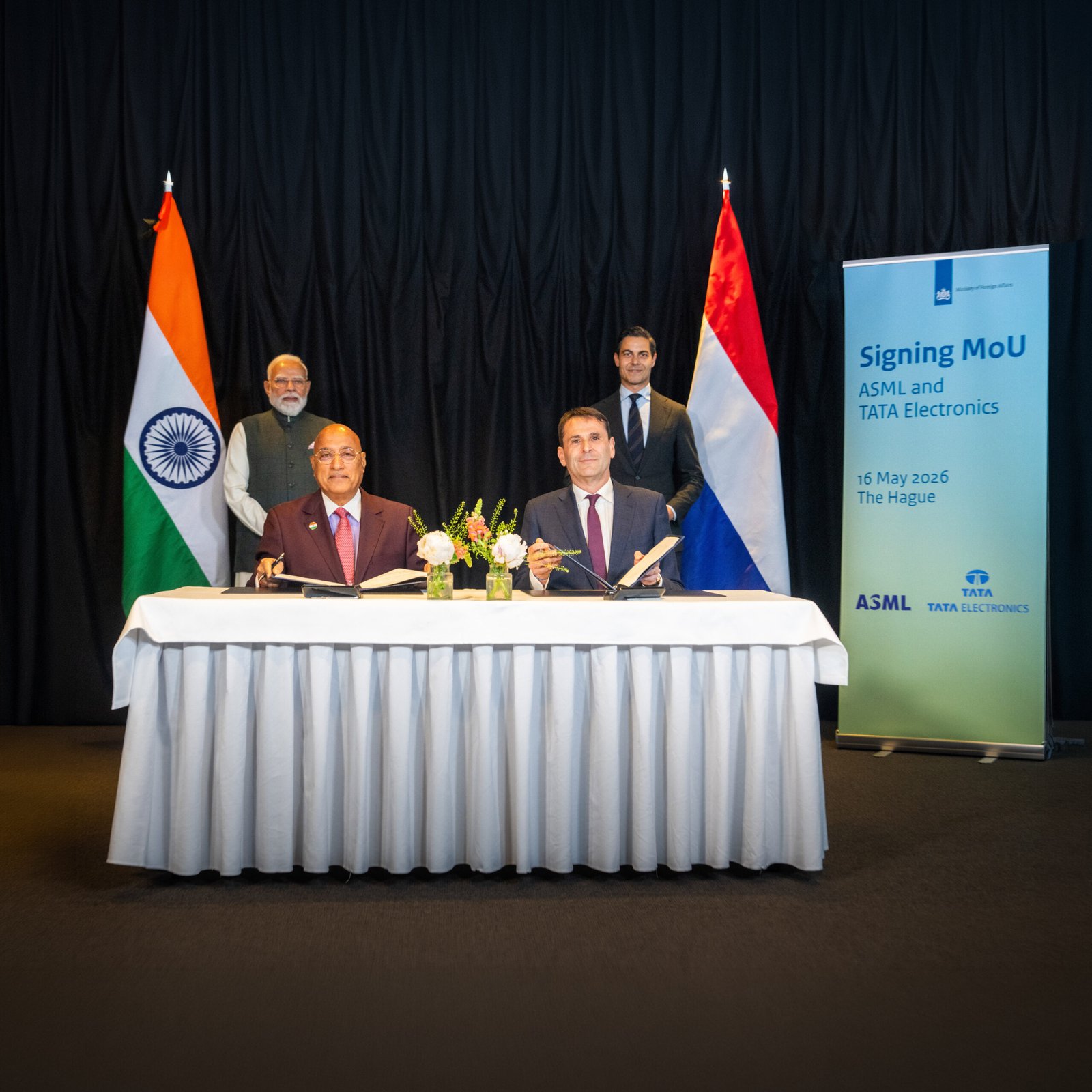
The project has also attracted multiple high-profile investments. Micron Technology has established an advanced ATMP facility in Gujarat. Tata Electronics has announced major investments in semiconductor fabrication and packaging facilities. Additionally, CG Power, Renesas Electronics and Kaynes Technology have also begun partnerships. India’s strategy differs from China’s and the United States’ strategy. Rather than immediately attempting to compete in cutting-edge logic fabrication, India has prioritised packaging, testing, mature-node manufacturing, and semiconductor design. This phased approach recognises both the immense capital requirements of advanced fabrication and India’s existing comparative advantages within the global semiconductor value chain.
The Progress So Far
It has been five years since IMS was launched, and so far, its progress has been consistent with its objectives. Investments from global firms like Micron suggest that India is increasingly viewed as a credible destination for such investments. Furthermore, these investments also signal that ISM’s incentive structure has worked in improving investor confidence.
Furthermore, India’s semiconductor ambitions have benefited considerably from changing geopolitical dynamics. The growing emphasis on supply-chain resilience, friend-shoring, and trusted technology partnerships has created opportunities for countries outside traditional semiconductor manufacturing centres. Strategic cooperation with the United States, Japan, Taiwan, and European partners has become increasingly important in facilitating technology transfer, workforce development, and investment. India’s participation in initiatives such as the Quad has further reinforced its position as a trusted partner within emerging Indo-Pacific technology networks.
However, there are serious structural challenges to India’s ambition. Semiconductor fabrication requires uninterrupted electricity, ultra-pure water, sophisticated logistics, and highly specialised industrial ecosystems. Developing such infrastructure demands sustained public and private investment extending well beyond financial incentives.
A second challenge involves technological dependence. Despite progress in attracting manufacturing investments, India remains dependent on foreign suppliers for critical semiconductor equipment, materials, and manufacturing technologies. Companies such as ASML, Applied Materials, Lam Research, and Tokyo Electron dominate global equipment markets, limiting India’s technological autonomy. Developing indigenous capabilities in these areas will require long-term investment in research and development.
Human capital represents another important constraint. Although India possesses an extensive pool of software engineers and chip designers, semiconductor manufacturing requires specialised expertise in process engineering, materials science, clean-room operations, and advanced fabrication techniques. Expanding educational programmes and strengthening collaboration between universities and industry will therefore be essential for sustaining future growth.
Economic considerations also present significant challenges. Modern semiconductor fabrication facilities often require investments exceeding US$20 billion, while remaining globally competitive demands continuous technological upgrades. Countries such as Taiwan, South Korea, the United States, and China have invested for decades in building integrated semiconductor ecosystems. India therefore faces the difficult task of entering an industry characterised by exceptionally high barriers to entry and intense international competition.
However, evaluating India’s semiconductor strategy solely against the benchmark of Taiwan or South Korea risks overlooking its distinct objectives. The India Semiconductor Mission does not necessarily seek immediate leadership in cutting-edge semiconductor fabrication. Instead, it aims to establish a resilient and internationally competitive semiconductor ecosystem that leverages India’s comparative strengths in design, packaging, testing, and mature-node manufacturing while gradually expanding domestic manufacturing capabilities. Viewed through this lens, the ISM has made measurable progress in laying the institutional and industrial foundations necessary for long-term growth.
Conclusion
The India Semiconductor Mission represents the most ambitious semiconductor policy undertaken by India since the establishment of Semiconductor Complex Limited nearly five decades ago. The mission benefits from favourable geopolitical conditions, increasing interest in diverse supply chains, and India’s mature semiconductor design ecosystem and by combining financial incentives with strategic international partnerships, the ISM has successfully attracted major investments and enhanced India’s credibility in the global semiconductor Industry.
It should be noted that India remains at an early stage of developing a comprehensive semiconductor manufacturing ecosystem, as there are still major gaps in infrastructure, technological dependence, workforce development, and the enormous capital requirements of complete fabrication pose a substantial challenge. Furthermore, the success of the ISM should not be solely judged by short-term achievements like the establishment of fabrication plants; rather, its long-term success depends on whether India can build a sustainable infrastructure which integrates all aspects of Semiconductor production. If supported by consistent policy implementation and continued international collaboration, the ISM has the potential to transform India from a global semiconductor design hub into a significant participant in the broader semiconductor value chain.