


The character of warfare is changing and preparedness must evolve accordingly. In this context, Tarang Shakti 2026, the Indian Air Force’s multinational air combat exercise, stands out as its distinctive intent is to learn the latest combat strategies and philosophies with interoperability of most advanced air platforms.
Inaugurated on 26th September at Jodhpur Air Force Station in Rajasthan, the exercise is providing practical training in the coordinated use of diverse aircraft and systems to execute precise missions. It will also give the Indian Air Force a rare opportunity to evaluate, in one setting, the performance and technical characteristics of the world’s most advanced aircraft while demonstrating India’s own preparedness and capabilities.
This event builds on the inaugural ‘Tarang Shakti 2024’, on a larger scale. In 2024, 29 foreign countries had participated with 10 countries deploying their air assets and 18 countries joining as observers. This time around, 39 countries are taking part. Seven of these- the US, France, Germany, Australia, the UAE, Sri Lanka and Bangladesh- are participating with their flying assets while 32 other friendly countries are joining as Observers. Two of the participants from the first edition- the UK and Spain- are not participating this time, while Sri Lanka has moved up from observer status to deploying flying assets. The IAF had sent invitations to 65 countries.
Operational Capabilities of Various Aircraft
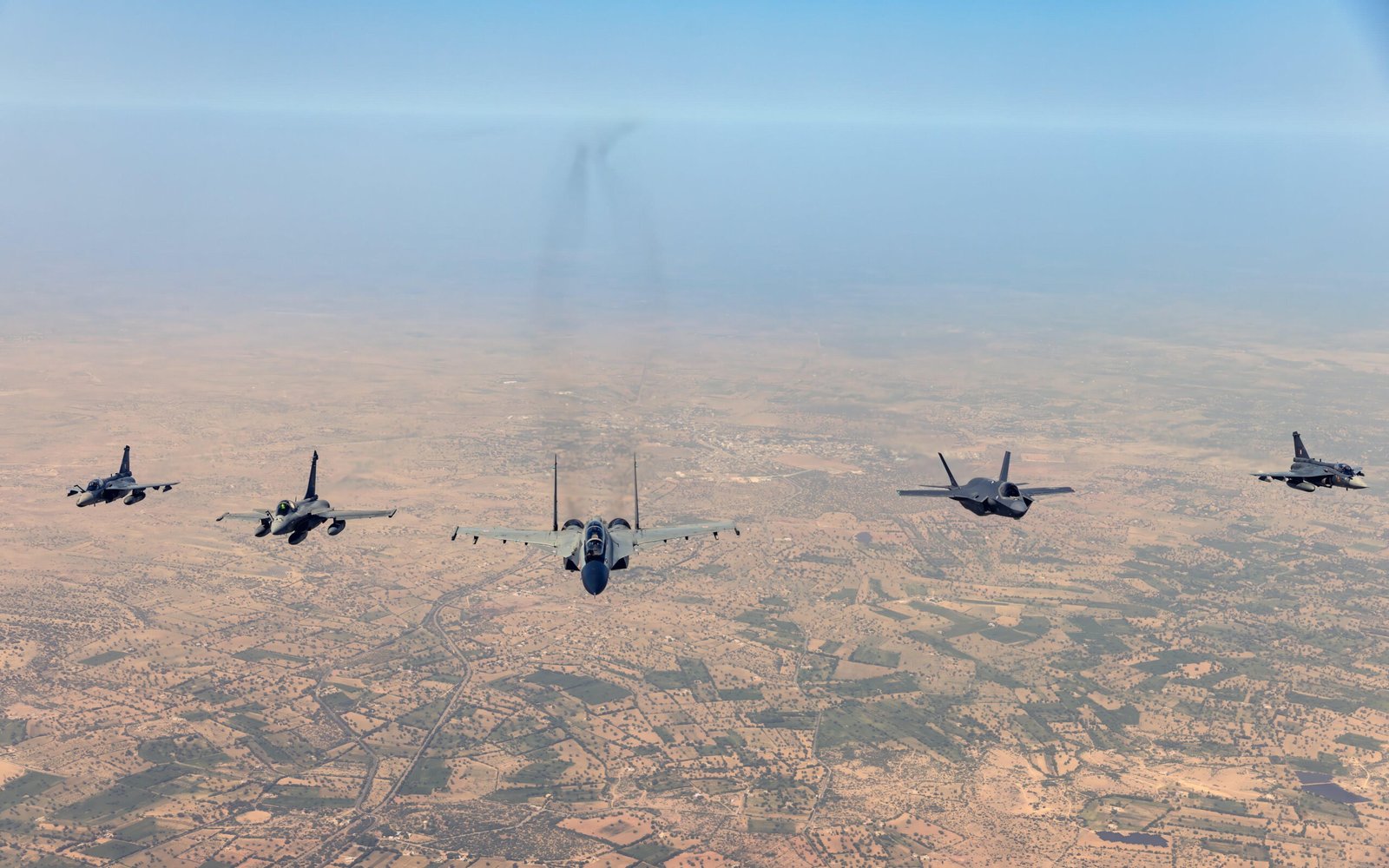
A central feature of the exercise is the opportunity for the experts and mission planners to examine how advanced aircrafts and supporting systems operate together. The foreign aircrafts which are taking part this year include American F-35 Lightning II, F-16, C-130J (used for tactical airlift, humanitarian relief and combat missions), France’s Rafale jets, European A400M (military transport aircraft) and MRTT (Multi-role tanker transport aircraft), Europe’s KC-30A aircraft (used for aerial refuelling and strategic transport) alongside frontline Indian contingent of Su-30MKI, Tejas, MiG-29, and Mirage 2000 aircrafts.
The exercise brings together a diverse mix of combat, airlift and air-to-air refuelling capabilities. Participating air arms are engaged in advanced joint training, exchange critical operational insights, and consolidate professional experience while operating side-by-side frontline IAF platforms. These interactions are intended to enhance mutual trust and build enduring partnerships among the participating air forces.
The French Air and Space Force has deployed four Rafale F4 fighters, three A330 MRTT Phénix aircraft and two A400M Atlas aircraft, highlighting the growth of India-France aerospace and defence cooperation. The A400M provides airlift capability, while MRTT and KC-30A support air-to-air refuelling and transport roles. Transport aircraft such as the C-130 and C-130J are designed for tactical airlift missions.
Beyond the Flying Operations
The event has an expanded agenda incorporating professional seminars, industrial tours showcasing India’s growing aerospace and defence ecosystem, the Sekhon Marathon, cultural heritage visits and yoga sessions designed to cultivate camaraderie among multinational contingents.
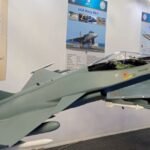
A high-level military delegation comprising more than 28 foreign observers- including representatives from Indonesia, Thailand, Brazil, Peru, Indonesia, Algeria, Nigeria, Ivory Coast, and Maldives- has toured leading defence and aerospace establishments in Bengaluru. At Bharat Electronics Limited (BEL), delegates witnessed advanced defense electronics and sensor systems. The National Aerospace Laboratories (NAL) showcased cutting-edge aerospace research and technological innovations, while Hindustan Aeronautics Ltd. (HAL) presented the Light Combat Aircraft “Tejas’’ Division.
The tour highlighted India’s Make in India and Aatmanirbhar Bharat priorities, enabling global air chiefs to evaluate India’s aerospace systems for potential future strategic procurements and defence-industrial cooperation. It also demonstrated the professional standards, institutional ethos and capabilities of Indian weapons and defence-equipment sector. India could showcase the indigenous achievements like the Tejas, Light Combat Aircraft (LCA), and Advanced Light Helicopter (ALH). This may give a fresh boost to Indian defence exports and international cooperation in the coming years.
India’s defence production and exports are rising rapidly. In the year 2025-26, defence exports reached an all-time high of Rs 38,424 Crore, an increase of 62.66% over the previous year. In this, the share of public sector undertakings (PSUs) is 54.84%.
Interoperability and Strategic Purpose
The theme of the multilateral exercise, “Power in Partnership”, reflects the value of working together, sharing expertise and building interoperability among partner air forces. At the same time, participants were required to work through differences in communication protocols, weapons systems, and operational doctrines.
The exercise is facilitating professional interaction among aircrew, mission planners and operational support personnel, with emphasis on interoperability, mutual learning, aerospace safety and enhanced understanding of operational procedures. It will provide participating forces an opportunity to not only operate together but also share experiences and gain a better understanding of each other’s capabilities and operating philosophies. The exercise will also feature humanitarian assistance and disaster relief (HADR) scenarios, underscoring India’s commitment to global peacekeeping and regional stability.
India’s approach combines constructive defence engagement and enhanced military cooperation in support of regional peace, security and stability, while strengthening partnerships and fostering greater strategic cooperation through shared operational experience. Even as India pursues international collaboration, national defence planners remain heavily committed to domestic self-reliance. The indigenous Advanced Medium Combat Aircraft (AMCA) programme- together with the Light Combat Aircraft (LCA) Mk-II- remains central to India’s sovereign air power strategy.
Recent International Experience
Previously this year, Indian Air Force had participated in other bilateral or multilateral exercises. One such was Exercise Udara Shakti 2026, with the Royal Malaysian Air Force (RMAF) at Subang Airbase, Malaysia. The IAF had deployed four Rafale fighter aircrafts along with two C-17 Globemaster III strategic airlift aircrafts, while the RMAF participated with Su-30MKM fighter aircraft, F/A-18D Hornets and an A400M transport aircraft.
Similarly, IAF participated in Exercise Pitch Black 2026 in Australia. It was organised by the Royal Australian Air Force (RAAF) from 20th July to 7th August 2026 in which 0ver 19 nations, including India, Australia, USA, UK, Japan, France, Indonesia, Singapore, South Korea, Canada, and other Indo-Pacific partners, participated.
The most recent participation of the Indian Air Force (IAF) was in an exercise in the USA, named Red Flag-Alaska 26-3, which took place from 13 – 28 August, 2026, with participation from the U.S. Air Force and the Royal Australian Air Force.
During Red Flag-Alaska, the IAF demonstrated its long-range power projection by deploying multi-role Rafale fighters, supported by C-17 Globemaster III transport aircraft and IL-78 aerial refuelling tankers. India is also pursuing indigenous development while drawing on foreign technology in niche domains such as hypersonic missiles and AI-driven warfare.
India’s participation in overseas exercises and hosting of huge multinational events strengthens its aerospace diplomacy, defence partnerships, and role in regional security architecture. These efforts align with the broader framework of India’s strategic autonomy and ethos of ‘Vasudhaiva Kutumbakam’ (the world is one family).

1 Comment
Bodhi Shri
October 5, 2026Training exercises of this kind is a good thing doubtlessly. But policy makers of the government should heed to the advice of Chief of Air Staff A. P. Singh that India without any loss of time increase its number of squadrons. India needs to add at least 40 fighter aircraft each year to maintain its current strength. Challenge is increasing each year.