



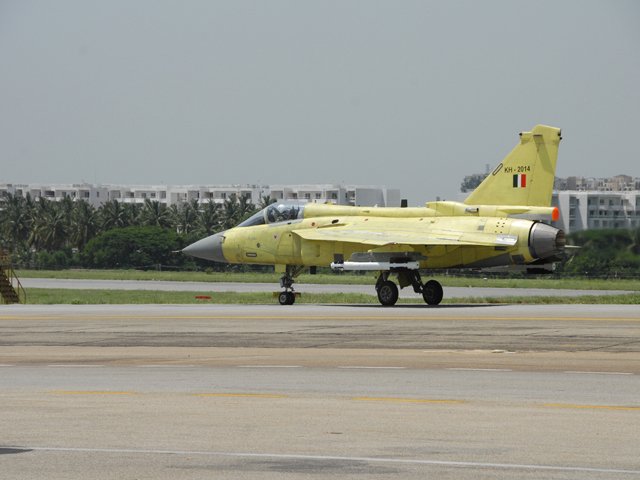
In the last article, I wrote about how the Light Combat Aircraft (LCA) project was a saga of tardy progress, and actually quite far from fulfilling the criterion of being indigenous in the real sense. Apart from being woefully inadequate in its indigenous content as far as its high-tech components are concerned, the IAF has not been delivered a product with the desired specifications in spite of overwhelming support from successive governments over four decades.
It is equally important to try and understand why it is that our Defence Research and Development Organisation (DRDO), Aircraft Development Agency (ADA) and Hindustan Aeronautics Limited (HAL)- the three main agencies responsible for developing and producing the LCA- have not been able to deliver quality indigenous airborne platforms for more than 75 years now. The reasons are actually quite obvious to anybody who genuinely wants to identify them and do some course correction.
The Extraordinary Challenge of Aerospace Innovation
The development of airborne systems involves an exceptional degree of technological complexity, presenting significant challenges even to the world’s most advanced aerospace companies. These air power products, weapon systems and machines demand the highest quality of technology that is out there. Fighter aircraft are designed to concentrate maximum combat capability within a highly constrained airframe. Further, these products must withstand extreme environments, G-forces during manoeuvres, temperatures ranging from -50° to 50°+ Celsius within a short span of time, while maintaining the lowest possible weight.
These design demands require the latest and best technology with the most stringent of tolerances. Because of the overarching requirement to reduce weight while carrying maximum punch, fighter systems are supposed to be fitted in small, cramped spaces compared to other land and sea products. While indigenous development and production for the land and naval forces present considerable challenges, the technological demands of airborne systems are significantly greater. Consequently, shortcomings in DRDO’s development and delivery of such systems tend to have a pronounced impact on the IAF.
The Missing Ingredient: Culture of Accountability
Developing and delivering such technologically advanced, robust, lightweight, compact and highly reliable systems requires a significant R&D effort, backed by a commitment, a passion and above all, accountability to deliver or perish. The pursuit to come up with the best product at the most competitive price and in the shortest possible time needs considerable financial resources, but more importantly, it needs a competitive corporate culture and a structure that drives relentless R&D to improve performance, quality, size, reliability and costs. Fundamentally, the corporate world is driven to make a product that is better than most contemporary products in the market and cheaper than its competitors so that it sells and brings profits to the company- simple rules of thriving businesses, also referred to as ‘corporate culture’. But corporate culture also carries with it a certain element of ruthlessness, which encourages a perform-or-perish atmosphere.
In this atmosphere, every penny counts, and there is a constant drive to deliver and survive or simply perish. DRDO’s working is far removed from that culture, and that brings us to the second major reason – the non-existence of corporate culture in DRDO. For DRDO, there is never a dearth of funds for a new project. There are no consequences for non-delivery and no accountability for failure to deliver as promised or for funds wasted in the process. There is little pressure to deliver within defined timelines or to ensure that the resulting product is commercially viable and price-competitive with comparable offerings in the market. There is no denying that DRDO has developed a number of products over the years, but most of them are in the low- to medium-tech categories involving high-altitude food, clothing, housing and some medium-tech mechanical engineering stuff.
In the technology-intensive category, there are numerous instances where DRDO has succeeded in developing capable products, only for lengthy development cycles to erode their competitiveness, leaving them more expensive and less capable than comparable systems already available in the market. This sort of playing “catch-up” renders their products unviable in the global market and inadequate to meet the operational requirements of India’s own armed forces. However, this does not affect anybody at DRDO. It doesn’t affect their salaries, and more importantly, most of it very rarely affects the assured promotion of most of its scientists. Therefore, when nothing is at stake, and there is no accountability, there is no pressure to deliver or to drive excellence.
System Designed Around Delays
Another major organisational factor that is contributing to this situation is a conflict of interest in the management structure. DRDO, ADA and HAL all fall under the Ministry of Defence. Thus, there is a conflict of interest as both the user and provider are under the same Secretary’s jurisdiction. A Defence Secretary may be reluctant to acknowledge that the departments responsible for research, development and production have failed to meet the requirements of the armed forces. In fact, a major downside of this organisational setup is that often the armed forces are bullied into accepting delays and this underperforming product is inducted into the service for a host of reasons, not excluding political fanfare. This can happen without the highest political leadership ever becoming aware of the frustration within the armed forces. It is a separate issue that sometimes the leadership of the armed forces is also averse to rocking the boat during their tenure at the helm. So basically, you have a service provider and the consumer all under the same supervisor. How does one possibly expect the supervisor to report his own failure to the management in a highly risk-averse and ‘all is well’ atmosphere?
The Human Factor: Security Without Performance Pressure
A factor that is not visible prima facie but nonetheless plays a major role in DRDO’s underperformance is the mindset of the human resource in DRDO. Most R&D set-ups in any industry in the world are manned by engineers. Engineers seek actualisation of their ingenuity by creating a product that works and is viable for the company management to include, incorporate, and produce. The product performing in the real world gives a great sense of self-actualisation. In this regard, DRDO engineers and scientists are not fundamentally different. However, the engineers in the corporate world work under an underlying threat of serious consequences like losing a job, reputation and/or future avenues of livelihood if they do not deliver.
Compared to this, the situation for our DRDO scientists is somewhat different. There are endless funds, and little to no consequences akin to the economically sensitive corporate world. The DRDO scientists work with a considerable degree of comparative impunity. Take any military project purely from a technical enthusiast’s perspective, driven mainly by the engineer’s excitement of proving that a concept works but without any adverse consequences for their reputation or livelihood. From a livelihood perspective, they are basically looking at keeping the project alive as long as they are a part of the project.
When Engineers Design Without War fighters
Another factor that comes to mind is the ‘mission statement and manning’. There is an important difference between ‘something working’ and ‘something being battle-worthy’. All successful defence companies across the globe employ many soldiers, sailors and airmen who provide the much-needed operational inputs to any industrial or developmental pursuit. However, in India, these organisations have always somehow felt threatened by the presence of serving or retired military professionals in their midst. In the years when we delivered MARUT (India’s first indigenous jet), there were military professionals in the top leadership. Over time, their presence was reduced to an adjunct office. Nowadays, there is only a token sprinkling of military professionals associated with these organisations, many of whom are on second career options. As a result, the pursuits of our DRDO scientists are mostly removed from the realities of actual combat, and they have negligible exposure to the combat battlefield and its imperatives. The engineers know the technical specs and pursue those. They may often feel satisfied even if they come close. However, they probably do not fully comprehend the importance of those specs translated into performance, pitched against the adversary’s weapon system. The consideration of whether the product can be put into the battlefield is very rarely their serious or most important concern. As a result, most often, the armed forces are not willing to accept a product that will put them at a disadvantage in the battlefield.
The ‘Holy Cow’ Syndrome
Another factor is the ‘Holy Cow’ syndrome. Over a period of time, DRDO/ADA have become ‘Holy Cows’. Even if you find them doing something wrong, like reciting a verse incorrectly, you cannot point that out and if you do, you are doomed. You will be looked down upon. It is not politically correct to point fingers at these ‘holy cows’ and therefore, they continue to function as no political dispensation can afford to cut down funds for the so-called indigenisation drive. I am aware that the present government sought to introduce greater accountability within DRDO, particularly with regard to its track record and delivery commitments. However, these efforts encountered considerable bureaucratic resistance and institutional pushback, preventing the proposed accountability measures from being fully implemented. So, the atmosphere of non-accountability continues and so does the atmosphere of non-performance. In the private sector, if a company makes a product which is more expensive or lesser performing than your competitors, that company will face losses and eventual shutdown. However, that is not the case with DRDO. Conversely, every year, DRDO is only expanding- greater funds from tax-payers’ money are allocated, more engineers are hired, grander buildings are constructed as offices and the saga continues unabated.
Cost of Continuing as Usual
All these factors individually as well as collectively have contributed to this state of affairs where DRDO, ADA and HAL have not performed for more than half a century but continue to drain our nation of thousands of crores of tax-payers’ money. Nothing seems to be changing that would give people like me who have observed their work closely some hope. Till such time there is no oversight and control over DRDO and a change in the organisational structure- monitoring, coordinating and synergising defence production in India- there is little hope that we are going to see any material change in the state of affairs in the indigenisation of high-tech airborne products.
As an airpower proponent, the adverse impact of the non-performance by these organisations is felt most severely by the Indian Air Force. It would not be wrong to say that if something drastic is not done soon to address the monopoly of these defence organisations in R&D, I am afraid India’s mission of Atmanirbhar Bharat would remain a dream unfulfilled. Unless these shortcomings are addressed with candour and accountability, India would still be importing high-tech from abroad, even 50 years from now, to ensure that our armed forces remain fighting fit.