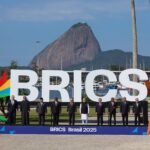

The 18th BRICS summit meeting scheduled for 12-13 September, 2026 comes at a time of heightened global uncertainty and continuing conflicts in which some BRICS members are themselves involved. In steering the upcoming BRICS summit, India will have to consider the internal dynamics of the expanded BRICS and the external context in which the group operates. How India does that will be conditioned by its larger foreign policy objectives, writes Prof Bhaswati Sarkar, Jean Monnet Chair, Centre for European Studies, School of International Studies, JNU.
Over the last decade, India’s global influence has grown significantly. It has registered steady economic growth; recent GDP figures released for 2026 peg growth at 7.8%, this despite the relentless pressure of US tariffs and impact of raging wars, especially the US-Iran one in West Asia impacting energy supplies. In pursuing its foreign policy, India has stressed on multi-alignment and strategic autonomy. India’s membership in the SCO, BRICS, IBSA, RIC, QUAD, I2U2 Group, and in trilateral formats like India-France-UAE and India-Australia-France reflect this approach. It has also been actively promoting the interest of the Global South; a concrete outcome was the membership of African Union in G20 under India’s Presidency in 2023.
By and large, up until 2024, India’s approach did work. But the last year has been particularly difficult. At the core of this difficulty is India’s turbulent relation with the US. Despite Trump referring to Modi as his friend on a number of occasions, he has not hesitated to slap 50 per cent tariffs on India’s exports to the US market or demanding that India move away from its energy and military ties with Russia. More importantly, Trump has gone ahead to entertain Pakistan’s Field Marshal Asim Munir twice in the White House, both heaping praise on each other. Trump has also revised the US strategy from the Indo-Pacific to the Pacific, US and China have had multiple meetings in 2026 and Trump appears to be embracing the idea of US-China “G2”.
These developments have forced India to weigh its options and recalibrate its approach. Focus is now on new strategic partnerships, free trade agreements, improving relations with China beginning with PM Modi’s visit to China after seven years for the SCO summit between 31 August – 01 September 2025, to the more recent announcement of the 8-point boundary consensus. It is in this context that the upcoming BRICS summit takes place.
BRICS – Inception to expansion
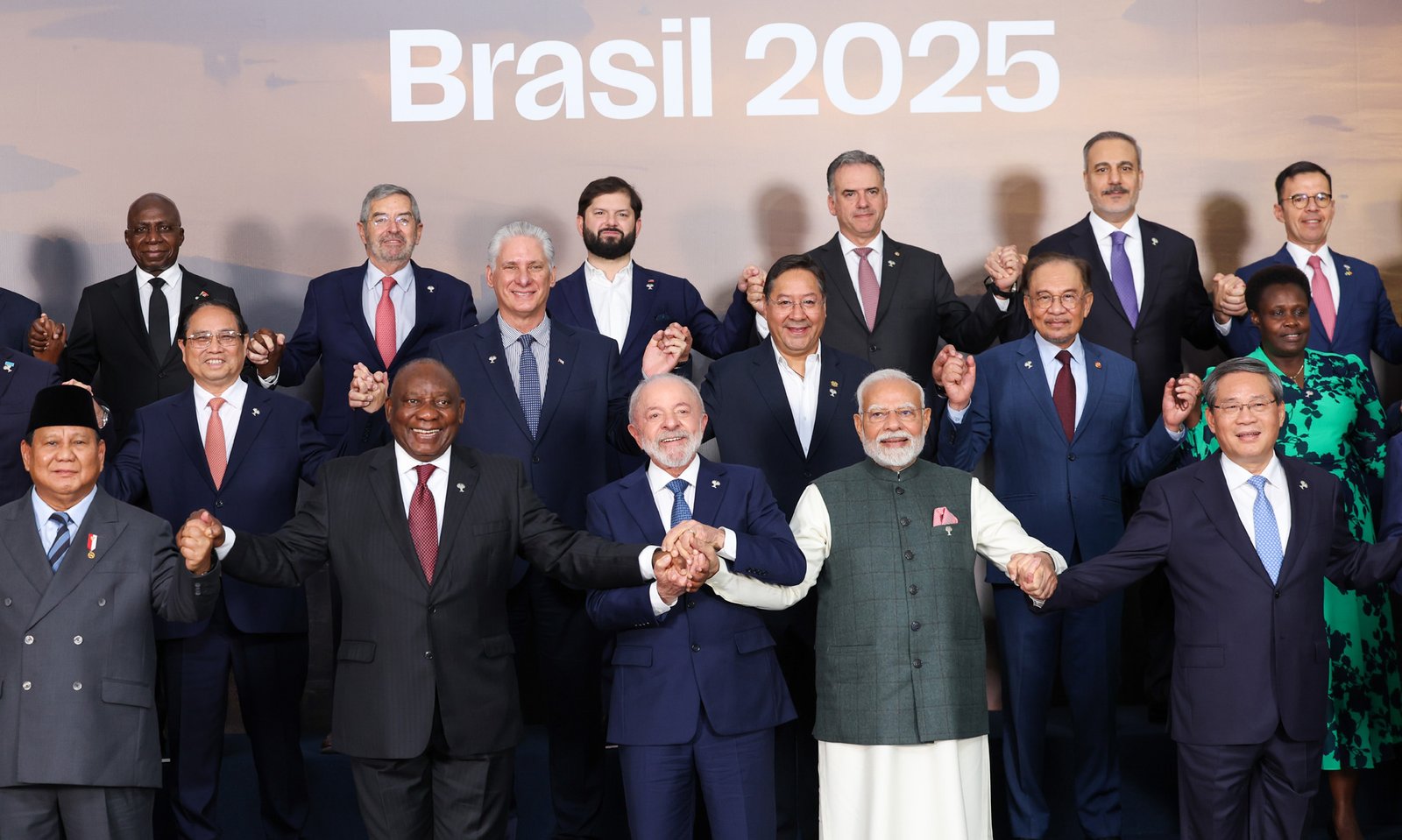
From 2001 when the acronym ‘BRIC’ was first suggested by Jim O’Neil, a Goldman Sachs banker, to refer to Brazil, Russia, India and China- countries that he projected would have a significant impact on the global economy- the grouping has come a long way. These countries came together as a group for the first time in 2009 when they held a summit at Yekaterinburg, Russia. The very next year, with the addition of a new member- South Africa, BRIC transformed to BRICS. At the 16th BRICS summit in Kazan, Russia on 22-24 October 2024, the group expanded to include five new full members- Saudi Arabia, Egypt, UAE, Ethiopia, and Iran- and approved the creation of the BRICS partner country status with accession criteria. Argentina was also to join in 2024 but ultimately withdrew and Saudi Arabia suspended accession though it did participate in the Kazan summit. In 2025, Indonesia was added as a full member recovery, public-health cooperation, vaccine development, and the need for widespread immunization on the BRICS cooperation agenda. The Partnership for the Elimination of Socially Determined Diseases has focused on pooling research capacities on tuberculosis and vaccine research, and it also launched a medical regulatory convergence initiative. Another important area of collaboration is the Science and Technology Initiative launched in 2015. It has announced seven calls for collaborative proposals across multiple themes such as sustainable agriculture, new and renewable energy, space, medicine.
India in BRICS
Prior to the 2026 Presidency, India has assumed BRICS Presidency thrice – in 2012, 2016 and 2021. One recurrent issue that India has particularly emphasized on all three occasions is the threat of terrorism, arguing that terrorism is a global threat which requires to be addressed by collective action and stronger institutional mechanisms.
At the 13th BRICS Summit of 2021 at New Delhi marking the 15th anniversary of BRICS, India introduced new ministerial tracks such as the Digital Health Summit and the Water Ministers’ Meeting and also got together the Heads of Space Agencies to sign the BRICS Remote Sensing Satellite Constellation Agreement, advancing cooperation in climate research, agriculture, and disaster management. Besides, BRICS Counter-Terrorism Action Plan, the BRICS Customs Mutual Assistance Agreement, and the operationalization of the Agricultural Research Platform were the other deliverables.
On the currency front, India’s digital payments revolution is gaining international momentum. UPI is operational in over eight countries, including key markets like the UAE, Singapore, Bhutan, Nepal, Sri Lanka, France, and Mauritius. None of them, apart from UAE, is in the BRICS grouping. Prime Minister Modi is actively pitching for UPI’s expansion within the BRICS grouping.
Upcoming Summit – What can we expect?
India’s Presidency in 2026 comes at a time when global uncertainties have grown manifold. The summit outcome will depend on India’s consideration of its foreign policy objectives; the internal dynamics of BRICS and the external realities in which individual members and the group as a whole operates. The greatest challenge will be to balance the equation of the members within. While it is a group representing the Global South, the contestation with the Global North is far from straight forward, based as it is on the equation of each of its members. The relations of China, Russia and Iran with the US are that of open challenge and confrontation which makes them more invested in developing BRICS as an anti-Western bloc, a position that does not work for India or for new member countries like Egypt, Saudi Arabia and the UAE, which have strong ties with the US, uncertain and difficult as they maybe. Though there is some cautious mending of India’s relation with China, it continues to be wary of China’s proximity to Pakistan and growing influence in the neighbourhood. Besides, the BRICS now includes both Iran and the UAE as full members which has brought regional rivalries directly into the group, making consensus difficult. The inability of the foreign ministers to come out with a joint declaration after their May 20 meeting reflected this difficulty. After India’s successful G20 Presidency, expectations from India are high. President Trump has not taken kindly to the BRICS, identifying it as a group that challenges US power and has and Belarus, Bolivia, Kazakhstan, Cuba, Malaysia, Nigeria, Thailand, Uganda, Uzbekistan and Vietnam joined as Partner Countries. As BRICS membership expanded, it has come to include new regions – Southeast Asia, Central Asia, while increasing its footprints in Africa and Latin America.
Growing salience
The growing importance of BRICS is more than a mere increase in membership. Notably, the bloc together accounts for around 40 per cent of global GDP, about 26 per cent of global trade and 49.5 per cent of the world’s population. China and India are two of the world’s largest economies and most populous countries. Russia, Saudi Arabia, Iran and the UAE are major energy exporters. Between 2003 and 2024, they achieved an average annual GDP growth rate of 6.2 per cent as against the global average of 3.0 per cent. Intra-BRICS exports between 2003 to 2024 grew from $84.2 billion to $1.17 trillion, a 13.3 per cent growth rate as against the world’s rate of 5.7 per cent.
The BRICS members have identified three broad areas in which they cooperate – politics and security; economy and finance; culture with stress on people-to-people contacts. Across the summit declarations, the group underscores that the current international financial architecture needs to better represent the voice of the emerging markets. While the group does stress on UN-centred multilateralism and consensus-based cooperation, the members also call for global governance reform, especially of the UNSC.
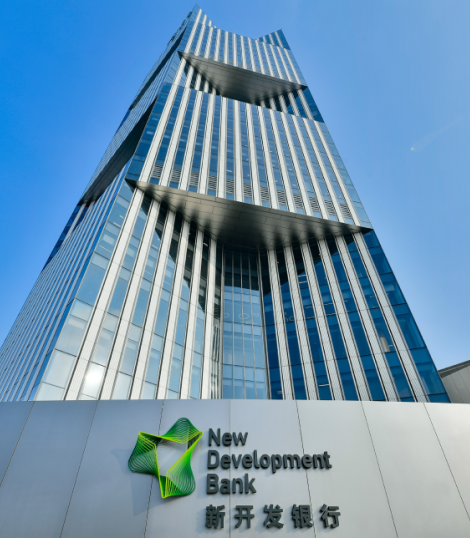
The New Development Bank and Contingent Reserve Arrangement are successful institutionalisations that BRICS has achieved. Functional since 2014, by the end of December 2025, NDB approved around $43.0 1 billion for 139 projects in the Bank’s member countries and there were 115 projects in the Bank’s active portfolio with total NDB financing amounting to more than $35.6 billion. It has focused on two critical areas of the Global South’s economic development: infrastructure and sustainability and extended support for disaster relief, particularly evident during Covid when the Bank launched a $10 billion emergency assistance program to deal with the pandemic and for economic recovery. South Africa, Brazil, China and India- all received assistance. In 2024, $1.1 billion was allocated to Brazil for reconstruction after floods. The CRA, however, has not been put to use yet, but seven technical test runs have been conducted to be implementation ready.
Another area that has caught much attention is the BRICS consensus on the need to reduce reliance on the dollar. This was operationalised by adopting coordinated and independent initiatives encouraging the use of local currencies in trade, finance, and investment. This led President Trump to come down heavily against BRICS, warning the group would be “dead” if it went ahead with plans to launch a rival currency to the dollar. However, at the moment, beyond promoting the use of their national currency, there is little interest in BRICS of replacing one currency dependency with another. Interestingly, President Barack Obama in 2015 had first warned that an overuse of sanctions could be detrimental for the dollar. Apart from questions of reformed multilateralism, global governance and currency, the BRICS focus has been on issues of terrorism, food and energy security, women’s inclusion through the Women’s Forum and Women’s Business Alliance, climate finance, artificial Intelligence, human-centric AI regulation. The Covid pandemic brought issues of inclusive economic threatened 100% tariffs to put his message across. India’s European partners expect India to play a bridging role between the North and Global South. French President Emmanuel Macron, who holds the G7 Chair for 2026, has urged PM Modi to act as bridge between the G7 and BRICS. He suggested that both BRICS and G7 should work to prevent ‘Global Fragmentation’ – G7 should not be an anti-China or anti-BRICS Club, and that BRICS should not be anti-G7. Macron urged Modi to use India’s leadership of BRICS to foster formal coordination between the two Blocs.
In an expanded BRICS, the Indian leadership is aware of the challenges of consensus building and continued cooperation. PM Modi has articulated that India would give a “new form” to the BRICS grouping. He has proposed redefining BRICS as ‘Building Resilience and Innovation for Cooperation and Sustainability’, with a focus on “people-centric approach and the spirit of Humanity First”. Throughout the year many events and ministerial meetings like the Academic Forum, Sports Ministers’ Meeting, Youth Summit, Women Working Group Meeting, Civil Forum, Eat Right Walkathon, have been organised emphasizing the people-centric agenda. Committed to multi-alignment and strategic autonomy as it is, India reiterates the need for collective global efforts to address shared challenges. With this approach India would prefer to use the BRICS platform to increase individual and group capacity to tackle pressing issues like health, climate, energy, technology, innovation, startups, digital public infrastructure, on which the eleven governments, even with different geopolitical compulsions, can commit to work together. This will ensure that BRICS continues to be useful for India and the other members. It is precisely in the current global uncertainties that members need to get their act together and ensure BRICS appears united rather than fractured.