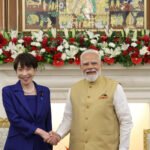

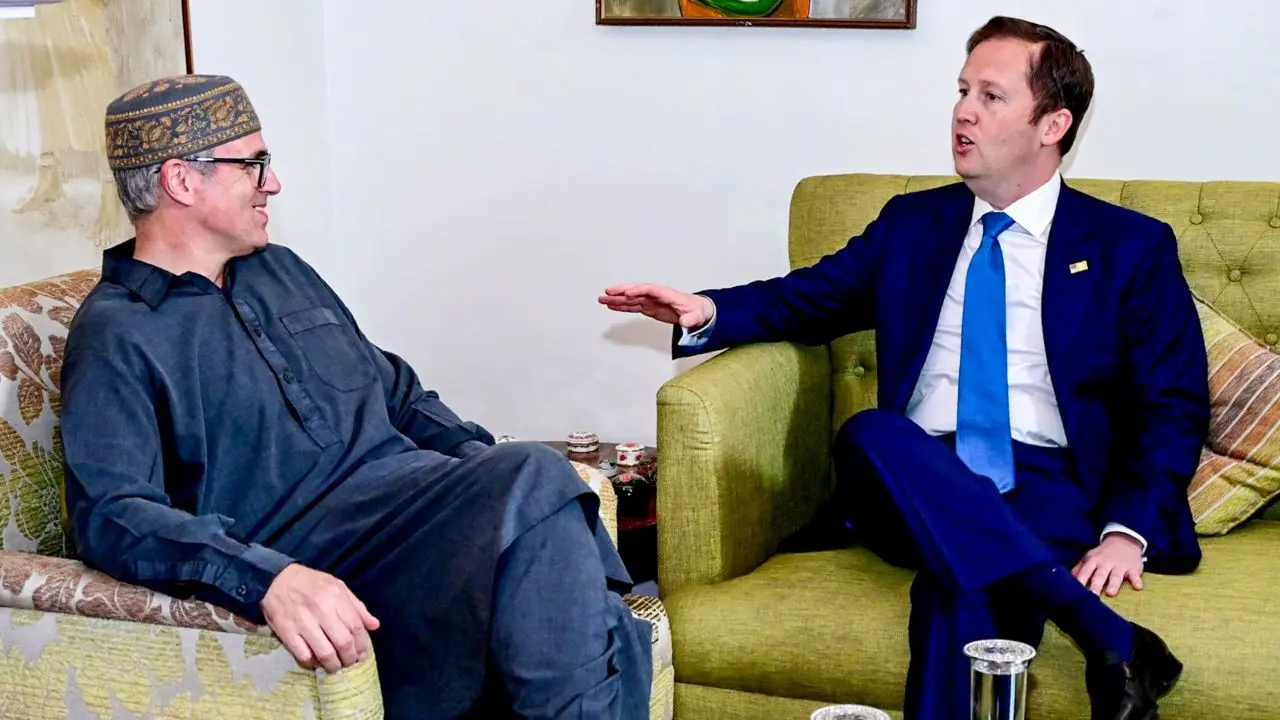
Sergio Gor, the United States Ambassador to India, described Jammu and Kashmir (J&K) as an “important part of India” during a visit to Srinagar on 19 Aug, 2026, where he met J&K Chief Minister Omar Abdullah. In response, the Pakistani government summoned the Chargé d’Affaires of the U.S. Embassy in Islamabad to protest the remarks, describing them as “irresponsible…and running contrary to the United States’ commitments”. Gor’s statement on Kashmir marks a notable shift in the narrative of America’s public position on Kashmir. Daanyal Zaidi analyses this shift.
Ever since Partition, United States has viewed Kashmir as an unresolved territorial dispute and advocated for a UN-supervised plebiscite to resolve the dispute. However, this approach was not acceptable to India, which has consistently maintained that Kashmir is an integral part of the country and that Pakistan’s occupation of parts of the territory resulted from an illegal invasion and the use of force. While the United States maintained a neutral approach during this era, its official records indicate that it was more concerned with the immediate cessation of violence rather than finding a lasting solution. Additionally, it viewed Sheikh Abdullah, who was the interim head of Indian Kashmir, as a “partisan actor” who could not be made part of any neutral talks regarding Kashmir. This presents an interesting parallel with the present-day stance, when the American ambassador met Sheikh Abdullah’s grandson, Omar Abdullah, and described Kashmir as an “important part of India”.
Negotiated Settlement Approach in the 60s
In the 1960s, the Kennedy government was actively involved in solving this issue and still maintained that India and Pakistan should resolve their dispute through a UN-supervised plebiscite. However, internal U.S. government documents show that the Kennedy administration was becoming increasingly disillusioned with the idea of a plebiscite and was even considering publicly abandoning it in favour of a “negotiated settlement”. This transition in the American approach is important because, here, the US still regarded Kashmir as a disputed territory and would later come to the conclusion that it should reduce its involvement in the subcontinent. In the following years, the U.S. government would increasingly advocate a bilateral negotiation approach, wherein India and Pakistan were expected to resolve their dispute through direct dialogue without the involvement of any third party or an international body.
The Simla Agreement and Bilateralism
The Simla Agreement of 1972 between India and Pakistan saw the entrenchment of American support for a bilateral solution for Kashmir. Internal US government documents show support and admiration for ‘diplomatic maturity’ shown by both India and Pakistan, where both took considerable efforts to gain each other’s goodwill. The most important outcome of this agreement was the establishment of the Line of Control (LoC) which denoted the de-facto military border in Kashmir. Moreover, India and Pakistan decided that the Kashmir issue would be addressed bilaterally, which corresponded with American policy of reduced involvement in the region.
It should be noted that throughout the Cold War, United States’ engagements in South Asia were not completely neutral by any standard. During the 1971 war, the US was much friendlier with Pakistan than it was with India, as India was close with the USSR. The purpose of America’s strategic relationship with Pakistan was to incorporate the country into its broader strategy of balancing Soviet Union’s influence in South Asia; while India was more strategically involved with the USSR. During the Soviet invasion of Afghanistan in 1979 and the subsequent anti-Soviet jihad, the U.S. depended heavily on Pakistan to support the Afghan Mujahideen, leading to a further strengthening of their strategic partnership. Additionally, tensions between India and the US grew after the Pokhran-II nuclear tests. Irrespective of these dynamics, the United States remained principally neutral on the Kashmir issue. In this regard, Ambassador Gor’s statement is anomalous because it echoes India’s claim of Kashmir being an integral part of India.
Post-Cold War involvement
During the 90s, the United States decided to get involved in the Kashmir issue again due to rising militancy and human rights concerns. These developments took place in the larger context of the Indo-Pak nuclear race, the rise of the US as the hegemonic power, and the consolidation of a US-backed liberal world order in which human rights concerns and international law became overt drivers of American foreign policy. Official US documents from the early 90s show that it saw the “former princely state” as a disputed territory and did not see Kashmir as an integral part of India. However, towards the end of the decade, the US adopted a crisis management approach rather than deciding on Kashmir’s status.
Post 9/11 Reorientation of US Kashmir Policy
During the Bush administration, the US government acknowledged the significance of the territorial disagreement while refraining from dictating a specific resolution. In 2001, Secretary of State Colin Powell emphasised that while India and Pakistan must settle the issue themselves, the process required addressing human rights and the will of the local population. Concurrently, the geopolitical shift following 9/11 elevated counter-terrorism as a central pillar of the American strategy, leading to intensified demands for Pakistan to dismantle terrorist infrastructure in the region. This established a persistent diplomatic framework: advocating for bilateral negotiations, condemning all forms of violent extremism, and recognising the essential nature of Kashmiri civil liberties.
Article 370 and the Trump Administration’s Kashmir Policy
The first Trump administration slightly changed the US policy by constantly offering to mediate between India and Pakistan over Kashmir. India consistently rejected this proposal, citing that this was India’s internal issue. The State Department’s official line was that Kashmir was a bilateral issue between India and Pakistan, but the United States was willing to help, if asked. After the removal of Article 370 in 2019, Washington showed concern about Kashmiri human rights but did not challenge India’s decision. The subsequent Biden administration stated in 2021 that its policy towards Kashmir had not changed, but it welcomed restoring political normalcy in the newly formed Union territory.
After the Pahalgam terror attack, the second Trump administration strongly condemned the attack and reaffirmed counterterrorism cooperation with India. Vice President JD Vance also called on Pakistan to aid India in catching terrorists operating from Pakistan’s territory. However, when India launched Operation Sindoor, the US did not publicly endorse the operation but adopted a crisis management approach, trying to prevent that conflict from escalating into a wider one. When the hostilities finally ended, Trump claimed that the United States, under his leadership, had negotiated peace between the two countries. However, India denies this claim, stating the confrontation ended due to direct talks between India and Pakistan.
Sergio Gor’s Statement and its significance
Since Partition, the United States had never publicly acknowledged Kashmir as an integral part of India, despite changing geopolitical realities, shifts in the international order, and successive American administrations. In this regard, the American Ambassador to India, who is also the Special Envoy for South and Central Asian Affairs, publicly stating that Kashmir is an “important part of India” marks an important narrative shift for the United States. These remarks appear to be the first by a senior US public official in support of India’s territorial claim. However, observers should be wary of attaching unnecessary significance to this statement, as the US has not made any further remarks explicitly supporting India’s claim, even though Gor praised both the central government and Omar Abdullah’s administration for making the region more secure. Lastly, we should wait for a formal policy change before drawing any larger conclusions. So far, there has been no such change, as the State Department’s website still describes Kashmir as disputed territory. Gor’s statement, therefore, remains a rhetorical shift and not a policy one, and should not be mistaken for one.