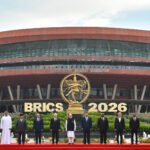

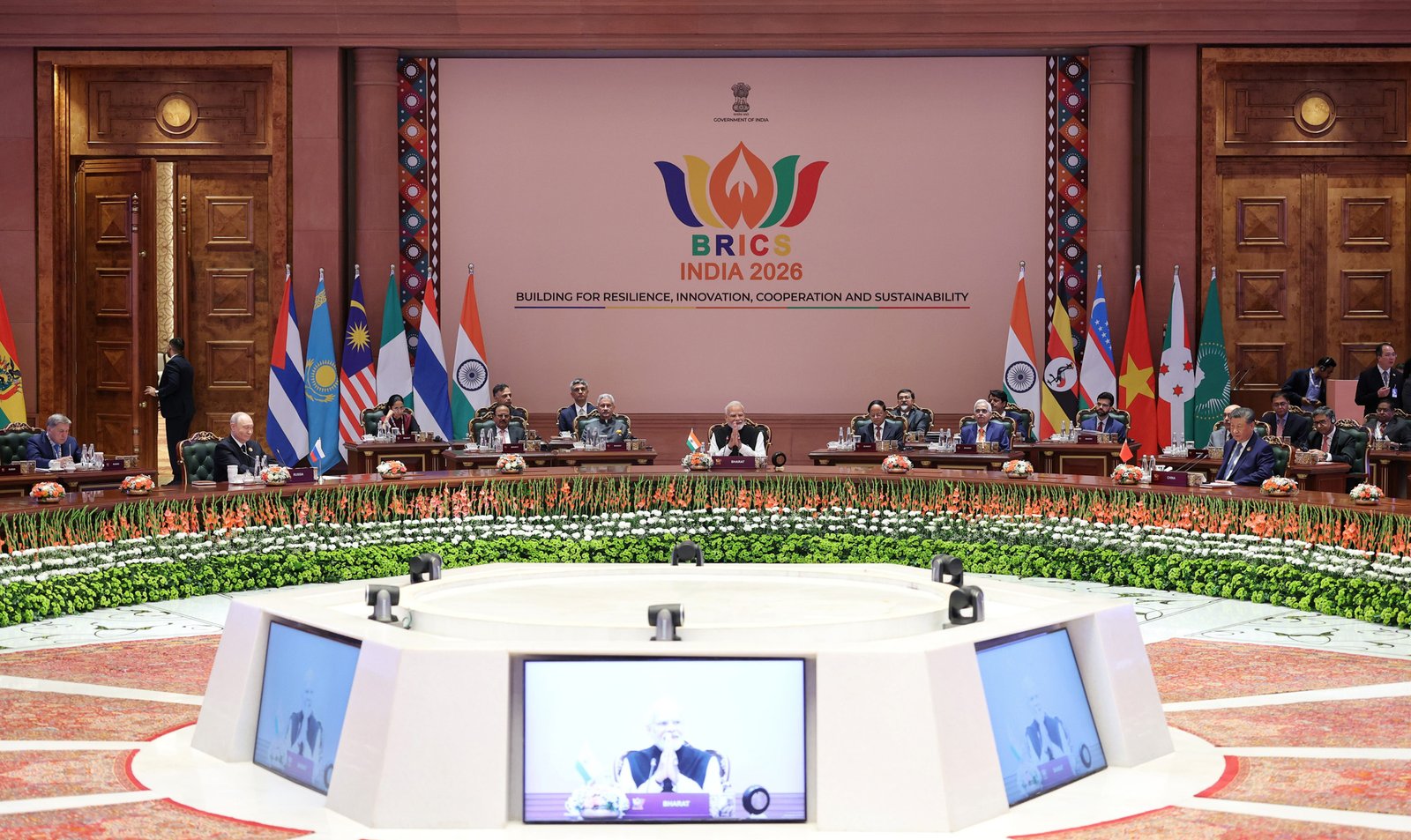
India’s chairship of the 18th BRICS Summit meeting, held at New Delhi from September 12-13, 2026, will go down in history for its global diplomatic acumen in the midst of acute tensions across the globe. With the slogan of “driver for positive change”, the BRICS nations are also steering the Global South towards a constructive and optimistic outcome in an otherwise gloomy global scenario wracked by conflict.
The BRICS summit at New Delhi stands out as one of the most difficult events to have been convened with such diverse political formations, some at active loggerheads with each other and yet, due to its convening power and its diplomatic ability, was able to arrive at not only a compromise on contentious issues in contemporary times but propose several positive outcomes.
Just a few months ago, in May this year, the BRICS foreign ministerial meeting came a cropper on the West Asian conflict, with Iran, United Arab Emirates sparring over the joint declaration. However, while the unanimous New Delhi Declaration deplored “unprovoked aggression” (without naming names), the most attractive photo-ops were the meetings of Prime Minister Narendra Modi with the Iranian President and the latter’s meeting with Crown Prince of Abu Dhabi.
The West Asian conflict, as with the other conflicts, may not have ended with the BRICS declaration at New Delhi. However, the ability to assemble such a diverse group, finding a widely acceptable common denominator and making a principled compromise among the member states is an outstanding achievement.
Championing the Global South
The New Delhi Declaration also stands out as the longest and comprehensive in scope, covering a number of subjects of concern to the Emerging Market and Developing Countries (EMDCs) with 140 paragraphs, while the previous Rio summit in 2025 issued 126, the 2024 Kazan meeting 134, Johannesburg in 2023 with about 94 and Beijing meeting in 2022 as low as 75 paragraphs.
BRICS is known for its influence on the global scene for its impact on norm making, global and regional security issues, economic roadmap, and energy production and consumption. Overall, the Global South’s profile has increased recently, rising to 41 percent of global GDP, while the industrialised west in G7 declined to 58 percent, from an overwhelming 80 percent before. By voicing the economic and political concerns of the Global South countries, BRICS is becoming their spokesperson, some say the “vanguard”.
BRICS countries today have a total of $35 trillion in GDP, 49 percent of global population and 36 percent of global land area. With the clamour of new countries wanting to join the BRICS, its global profile is expected to increase further. However, the New Delhi summit did not admit new members, nor did it upgrade any of the ten “partner countries”. This indicates a lack of consensus or possibly in deference to efforts at institutionalisation of the current BRICS.
Towards Institutionalisation
As the baton was passed from Brazil to India to chair the 18th BRICS meeting, New Delhi conducted nearly 350 meetings in 32 cities across the country on political, security, economy, technological, cultural, civil society and other issues from the BRICS constituents. However, such annual massive exercise and talent may have gone unnoticed and unaccounted for in the absence of a secretariat or other continuous mechanisms.
Hence, PM Modi proposed a “troika” system of continuity in the BRICS decision-making process between the previous, current and the future chair, as is practiced in the G20 mechanism, along with a digital repository to track the implementation of decisions. However, it is not clear if this will be implemented. As the BRICS is more of a declarative forum, some argue that the formation of a headquarters will go a long way in the follow up and implementation process.
The De-dollarisation Debate
BRICS tried to steer away from major power pressures, both in the West and in the East, and this is reflected in the intensive debates on anti-West and non-West adherents within the grouping. While China is said to have driven the “de-dollarisation” debate, the declaration supported all options, specifically digital currency transactions, local currency usage and other arrangements, while “respecting national priorities”.
India’s trade with the expanded BRICS was more than $417 billion last year, while that of China is higher at $600 billion. While 65 percent of BRICS trade is now in non-US dollar currencies, 47 percent of intra-BRICS trade is conducted in China’s Renminbi, underlying the need to diversify currency exchanges in the grouping. Much of the energy transactions are being conducted in local currencies and as energy transactions have become controversial after the Russia-Ukraine war, Gaza and Iran conflict, this has become a crucial issue for many EMDCs.
A week after the BRICS summit at New Delhi, Saudi Arabia exited from mBridge digital currency platform, after Houthis began targeting Saudi pipelines, airports and other infrastructure. 40 percent of Saudi crude exports to China, conducted in Renminbi, has now become problematic, in addition to the status of petro-dollars. China’s connection with Iran, which backs Houthis, was seen as a geopolitical problem for Riyadh.
Regional Security
While Iran conflict played a significant role prior to the summit, it was not even mentioned in the declaration, except in reference to Iran’s membership of the World Trade Organisation (para 20). However, West Asian conflict figured prominently, including Gaza, Palestine, Syria and others, with some strident passages.
On terrorism, referred to in the declaration 17 times, para 40 mentions about the terrorist strikes in Jammu and Kashmir last April, that triggered Operation Sindoor. The declaration condemned “cross-border movement of terrorists, terrorism financing and safe havens”. While the declaration mentioned about BRICS Counter-Terrorism Working Group, no specific counter-terrorism mechanism, headquarters or exercises were proposed.
United Nations was referred to 11 times and its Security Council reform only four times in the declaration. Interestingly, the BRICS declaration raised UN staffing system and gender under-representation, while being critical of the monopoly on senior posts. Also, in the previous BRICS declarations, Brazil, South Africa and India were mentioned for the UNSC seat. However, under the pressure of Egypt and Ethiopia, South Africa’s name was dropped. The role of the Permanent Five is crucial in kick-starting the process of reform of the UNSC. Nevertheless, China is said to be extracting diplomatic concessions on this issue.
India’s Gains
From an Indian perspective, major gains include popularising and socialising ideas concerning Global South that in the longer run could endear India to the vast majority of developing countries in the world, balance global diplomacy and deepen its trade, investment, energy, technology and alternative supply chain mechanisms.
India has conducted “Voice of Global South” interactions thrice since January 2023. Nearly 120 countries have been participating in these deliberations to enhance technological cooperation, financial assistance, capacity buildup with emphasis on health, climate change, trade, energy and other subjects. India also succeeded in making African Union a member of the G-20 in 2023. As China is aiming to be the leader of the Global South in its tussle with the United States, India organising and raising Global South issues add a new dimension.
With the increasing threats of tariffs and sanctions, India needs to engage with the Global South countries for political solidarity and diversification of markets. The BRICS provides one such platform to interact with the EMDCs for mutual benefit. The New Delhi Declaration, in para 22, opposed “unilateral coercive measures” and called for “elimination of unlawful measures” – referring to the WTO rules and the United States’ imposition of debilitating tariffs.
Interestingly, para 67 raised problems related to critical minerals invoking both producers and suppliers. Global South countries are the largest producers and China the largest exporters of refined critical minerals, used extensively in automobiles, electronics, semi-conductors and others. China’s restrictions, first to Japan in 2012, and then, recently to the US and Europe, were extended almost to all countries, only to be relaxed last year. While the BRICS declaration called for promoting “reliable, responsible, diversified, resilient, fair, sustainable, and just supply chains of critical minerals”, it is not clear how this can be enforced and like most such declarative passages, it remains aspirational rather than implementational.
The BRICS declaration touched upon the dangers of nuclear proliferation and their increasing threat. This is reflected in Russian declarations on Ukraine as well as the US comments on “wiping out a civilization.” In the recent Operation Sindoor as well, Pakistan’s veiled threat to use nuclear weapons underscores the dangers of a nuclear fallout. Para 25 of the declaration expressed its “concern about the growing risks of nuclear danger and conflict.”
With the G-20 summit in 2023 and the current BRICS summit, India has proved that its diplomatic efforts could bring together warring states and hammer out a compromise formula for contentious issues. More significantly, the outcome of these two summit meetings is to voice the concerns and benefit the largest number of the Global South countries and convey a message that multilateral initiatives need not be confined to an elite group of countries in the world.