



Badakhshan’s growing instability is not merely an internal Afghan security problem. It is a province that sits at a critical geopolitical junction adjoining Tajikistan, China and Pakistan-administered territory through the narrow Wakhan Corridor, placing developments there within India’s wider security calculus. As Taliban forces struggle with anti-regime groups, internal factionalism and control over lucrative mineral resources, the possibility of greater instability in northeastern Afghanistan raises questions for India over terrorism, regional security, Chinese influence and the future of Afghanistan’s political order. Sanchita Bhattacharya, Research Fellow, Institute for Conflict Management, analyses what the turmoil in Badakhshan could mean for Afghanistan and India.
On July 23, 2026, fighters of the Afghanistan Freedom Front (AFF) killed 21 Taliban fighters and injured another 37 in a series of targeted attacks against Taliban bases, units and military detachments in the Zebak district of Badakhshan province. One AFF fighter was also killed. During the fighting, AFF fighters captured ammunition, light and heavy weapons, military equipment and other war material from the Taliban.
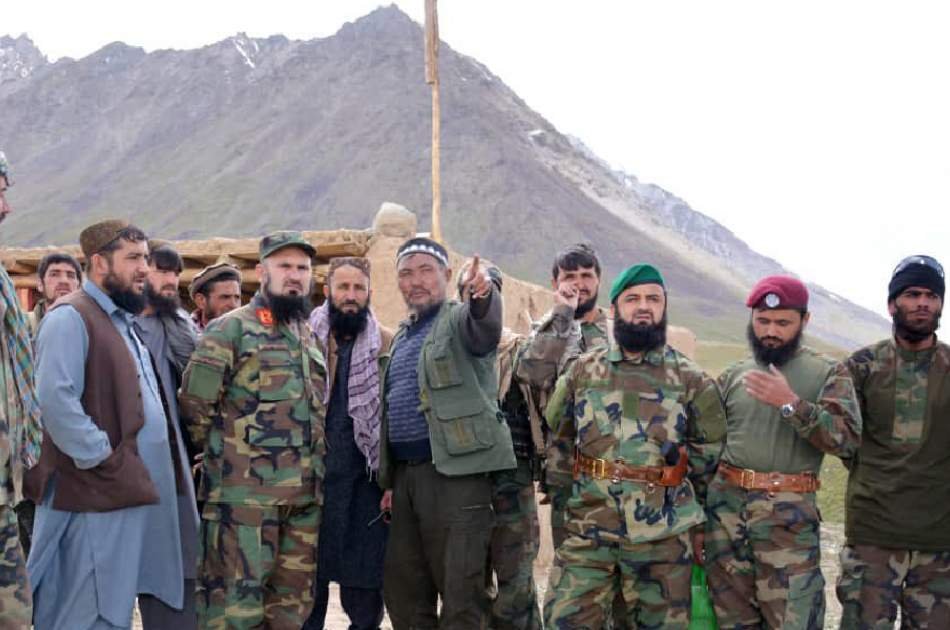
The attack came amid growing tensions between Taliban authorities and armed groups loyal to dissident local commander Juma Khan Fateh. On July 21, Taliban fighters stationed in Nusay district ordered around 350 armed men affiliated with Fateh, but without formal positions within the Taliban regime, to surrender their weapons. The warning was explicit: those refusing to disarm would face military action.
This was part of a broader Taliban effort to consolidate control over Badakhshan. On July 17, Taliban authorities claimed to have retaken Yaftal-e-Payin district following an overnight attack by anti-Kabul forces. Seven people were reportedly arrested and weapons and military equipment seized. Earlier, Taliban forces had begun disarming local fighters in Shahr-e-Buzurg district, with special forces deployed alongside senior Taliban officials.
According to partial data compiled by the South Asia Terrorism Portal (SATP), since the Taliban takeover on August 15, 2021, 216 people, including 57 civilians, 14 militants and 145 in the Not Specified (NS) category, have been killed in 73 incidents in Badakhshan, with data available until July 25, 2026.
A New Challenge to Taliban Control
The unrest has also produced new anti-Taliban formations. On July 17, the newly emerged Sepahian-e-Mihan (Patriotic Soldiers Front) claimed responsibility for an attack in Yaftali Sufla district, asserting that its forces had controlled the district administration building for several hours.
The Taliban responded by sending Army Chief Fasihuddin Fitrat to lead operations. Although Fitrat claimed that the assault had been foiled, the emergence of another armed group underlines the difficulty the Taliban faces in establishing uncontested authority in Afghanistan’s peripheral regions.
On July 22, Qayum Malang, Commander of Sepahian-e-Mihan, released his first audio message, declaring that he and his fighters were safe. He also stressed that the front “has its own plans and objectives” and that its members desire freedom above everything else. The organisation reportedly draws support from different sections of society, including residents of Badakhshan who are dissatisfied with Taliban rule.
The symbolism adopted by the group is also revealing. Its logo features the Simurgh (a giant bird of Persian mythology), the sun, the Hindu Kush mountains, lapis lazuli, a sword and the golden star of Bactria- symbols connecting local geography, history and identity with resistance to Taliban rule.
The Taliban’s more immediate problem, however, is Juma Khan Fateh, the influential and disgruntled Tajik commander of Badakhshan province who has become a festering wound for the Taliban leadership. Fateh, his relatives (including brothers Mohammad Musa Shahryar and Abdul Fattah), and his loyalist gunmen have been linked to land seizures, extortion, and illegal control of gold mines in Badakhshan. In late June, increased movements and a military build-up by Fateh were reported in the Darwaz area. He had organised his forces over the preceding days and held extensive meetings with residents in Nusay District.
Taliban authorities subsequently attempted negotiations. On June 25, Defence Minister Mullah Yaqoob Mujahid travelled to Badakhshan, officially to assess the security situation along the Wakhan, Ishkashim and Shughnan border areas, although sources suggested that the Taliban was also assessing its military options in the event of a confrontation with Fateh.
On July 9, Taliban Army Chief Fasihuddin Fitrat and Mawlawi Amanuddin, Taliban Governor of Helmand, travelled to Nusay district to meet Fateh, in an effort to ease ongoing tensions. He was subsequently transferred to Faizabad, the capital of Badakhshan, after receiving ‘guarantees’ from Fitrat. No details of the talks or any agreement between the two sides have yet been released. A day later, Juma Khan Fateh returned to the Darwaz region after pledging loyalty to the Taliban administration.
Yet the Taliban’s attempts to absorb or neutralise local power centres have not resolved the underlying tensions. On June 22, Taliban spokesperson Zabihullah Mujahid announced that Fateh had been removed as Zabul Deputy Governor without being assigned a new role. He also said that Taliban Supreme Leader Hibatullah Akhundzada had reshuffled several senior positions across government institutions. Further, Taliban forces established checkpoints in Shekay, Nusay and Maymay districts to monitor local movement.
Why India Should Care
For India, the geography of Badakhshan matters as much as the violence itself. The province encompasses Afghanistan’s northeastern frontier and the strategically sensitive Wakhan Corridor, the narrow strip of Afghan territory that extends towards China’s Xinjiang region. It also lies close to the wider India-China-Pakistan strategic triangle, including Pakistan-administered territory.
This makes any deterioration in Taliban control of Badakhshan relevant beyond Afghanistan’s internal politics. The rugged terrain, porous borders and weak governance could provide opportunities for militant, criminal or other non-state networks to exploit local instability. Any such development would have implications for India’s wider security environment, particularly given the continuing presence of terrorist organisations in the Afghanistan-Pakistan theatre.
The situation also warrants attention because of China’s strategic interests in Afghanistan. Beijing has a direct security interest in preventing instability from spilling towards Xinjiang through the Wakhan Corridor. Afghanistan’s mineral wealth and its potential economic value provide an additional incentive for Chinese engagement.
For New Delhi, the question is therefore not simply whether Beijing is increasing its engagement with Kabul. It is whether instability in northeastern Afghanistan could eventually encourage a deeper Chinese security and economic footprint in a region located close to the India-China-Pakistan strategic triangle.
The Battle for Badakhshan’s Resources
Badakhshan is a rugged and rocky, predominantly non-Pashtun province in northeastern Afghanistan, rich in gold, silver, aluminium, limestone, lapis lazuli, etc. After their takeover in 2021, the Taliban leadership has been mistrustful of the local Taliban commanders of Tajik and other ethnic backgrounds. A major point of dispute has been the control of Badakhshan’s rich mineral resources and mines. There have been frequent disputes between the Taliban and local miners.
On July 21, mine workers gathered outside the Taliban’s mining department building in Badakhshan to protest the continued closure of mining sites. They alleged that Taliban forces had threatened and beaten some workers and warned that the shutdowns were causing serious financial hardship for hundreds of families.
Earlier, on May 9, eight people were injured when local miners and residents clashed with Taliban-affiliated forces over control of the Qatqati gold mine in Shekay district. The confrontation reportedly followed allegations that Taliban forces had beaten miners.
The Taliban has responded by strengthening its security presence around mining operations. On February 19, Taliban Supreme Leader Hibatullah Akhundzada reportedly approved the deployment of 1,000 fighters to protect gold-mining operations in Badakhshan. On July 23, the Taliban Ministry of Interior announced an agreement with the Ministry of Mines and Petroleum to provide security for four major economic projects, including the Badakhshan lapis lazuli mine.
The struggle over Badakhshan’s mines therefore reflects a broader contest over Afghanistan’s economic geography. Mineral resources could become an important source of revenue for the Taliban and a potential channel for external economic influence. For India, this resource competition has a wider strategic dimension. Afghanistan’s mineral wealth- including resources of potential interest to regional powers- could increasingly become part of the geopolitical competition surrounding the country. New Delhi will need to watch whether resource partnerships contribute to Afghanistan’s economic stabilisation or deepen its dependence on a limited set of external powers.
A Question of Taliban Cohesion
The deeper problem for the Taliban is that Badakhshan exposes the limits of centralised control over Afghanistan’s periphery. The province has historically had a strong non-Pashtun demographic profile, and Taliban leaders have remained wary of local commanders belonging to Tajik and other ethnic groups. The confrontation with Juma Khan Fateh, the disarmament of local fighters and the emergence of new anti-Taliban groups all point to the same underlying challenge: the Taliban may control Kabul, but maintaining political and military cohesion across Afghanistan remains considerably more difficult. A fragmented Afghanistan, in which Kabul has limited authority over peripheral provinces, creates opportunities for militant groups, criminal networks, local warlords and external actors.
Badakhshan is in turmoil, largely due to the highhandedness and ethnic biases of the Taliban’s central leadership. The perennial mistrust of non-Pashtuns, untamed greed in exploiting local resources without paying heed to the common people, the emergence of anti-Taliban forces, and the unapologetic nature of the Taliban is pushing Badakhshan deeper into distress and violence.